Get Full Government Meeting Transcripts, Videos, & Alerts Forever!
Get email alerts on the Waste Management topic
No spam. Unsubscribe anytime.
Portsmouth sets transfer‑station sticker at $325 and keeps curbside sticker model at $64
Summary
After debate over pay‑as‑you‑throw bag pricing and fairness for curbside customers, Portsmouth council voted to set the annual transfer‑station sticker at $325 and to keep the curbside sticker system at $64 for FY27; the PAYT bag option was discussed but not adopted.
The Portsmouth Town Council provisionally set new fees for municipal solid‑waste services on April 29 as part of FY27 budget hearings. After staff presented two curbside options — a no‑PAYT sticker model and a PAYT bag model — the council voted to keep the sticker model and set the curbside sticker at $64. The council also set the Headley Street transfer‑station annual sticker at $325.
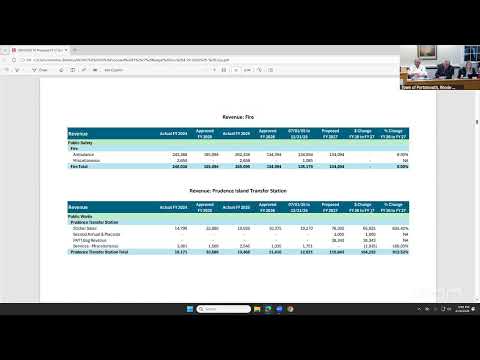
Staff said the transfer‑station enterprise budget for FY27 would be $798,436 based on projected sticker sales and a $20 per‑sticker repair reserve that would generate approximately $44,000 for capital repairs. Council debated the policy implications and cross‑access for Prudence Island residents — permit rules and interchange between Prudence and mainland stations were discussed as administrative follow‑ups.
For curbside collection, staff presented a projected budget of $1,730,319 under the no‑PAYT approach (sticker $64) and $1,797,490 if a PAYT bag system were adopted (recommended sticker $53 plus bag revenue). Supporters of PAYT argued the system can increase recycling and reduce tipping fees; opponents noted the upfront bag cost could exceed sticker savings for households that generate weekly trash. Councilors asked staff and the waste manager to continue outreach and to explore grant and educational funding to improve recycling rates.
The council provisionally approved the enterprise funds reflecting the chosen fee settings and directed staff to return with operational details and historical revenue/expenditure reports, including a break‑out of ambulance revenue used for public‑safety capital, to improve transparency before final adoption.