Get Full Government Meeting Transcripts, Videos, & Alerts Forever!
Get email alerts on the Public Safety topic
No spam. Unsubscribe anytime.
Council Member Harvey Epstein warns intake‑center move to Third and Bowery could increase neighborhood strain amid lawsuit
Summary
Council Member Harvey Epstein told CB2 his office is pressing DHS/DSS to ensure wraparound services and police perimeter plans for a proposed intake center at Third Avenue and Bowery, and said a lawsuit has delayed an opening previously scheduled for May 1.
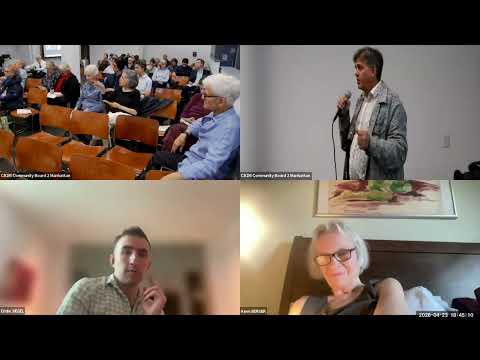
Council Member Harvey Epstein told Manhattan Community Board 2 that the city’s plan to operate an intake center on Third Avenue and Bowery represents a changed operation from the prior 30th Street facility and has generated neighborhood concern and a pending court challenge.
Epstein said the 30th Street site functioned as both an intake center and an 800‑bed men’s shelter with on‑site services, while the new Third and Bowery location will be oriented toward intake: people will be processed and then placed into other shelters, with 70 overnight beds for those who arrive late. "This is not going to be a shelter as we think of traditional shelter," Epstein said, and added that the city will continue onsite mental‑health and the Oasis drug‑treatment program.
He told the board that the city has refused, so far, to identify an alternate site and that a lawsuit filed to block the opening secured a stay through May 7, meaning the earlier May 1 opening date was delayed. "In theory they could really open on May 8th if the stay is lifted," he said, urging CB2 to coordinate with the bordering CB3 where the intake center is sited.
Epstein said his office has sought written commitments from DHS/DSS and that he has been working with the Ninth Precinct on perimeter patrols and operational plans to avoid the uncontrolled congregations that accompanied earlier migrant arrivals. He also said the council has asked DHS to provide a 24‑hour contact number and that his office is monitoring whether promised wraparound services and perimeter measures are in place.
Why it matters: Intake centers change how shelter system resources are delivered and may change patterns of street activity near residential neighborhoods. The stay granted by the courts makes the timing uncertain and puts pressure on DHS/DSS to document operational plans before any opening.
What’s next: Epstein said his office and CB2 should coordinate with CB3, the Ninth Precinct and DHS; he encouraged residents to use the 24‑hour contact line to report problems and said hearings and potential legal developments could alter the opening timetable.