Get Full Government Meeting Transcripts, Videos, & Alerts Forever!
Get email alerts on the Education Funding topic
No spam. Unsubscribe anytime.
Senate approves School Finance Act after floor debate about underfunding and priorities
Summary
Lawmakers debated whether the School Finance Act preserves funding stability after adequacy studies showed multi‑billion‑dollar shortfalls; sponsors said the bill protects K‑12 funding and passed the Senate on third reading.
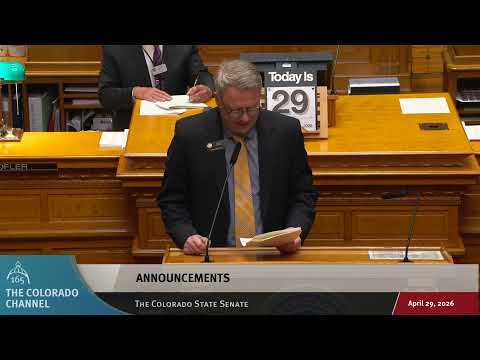
The Senate passed Senate Bill 23, the School Finance Act, on April 29 after floor speeches emphasizing the legislature’s effort to preserve and prioritize K‑12 funding.
Senator Culker, a sponsor, opened remarks by citing adequacy studies that estimate Colorado schools are underfunded by roughly $3.5 billion to $4.1 billion annually and said this year's measure prioritizes students and educators. “The work that we did this year was about making sure that we can afford to invest in education,” she said.
Senator Kirk Meyer said the bill is a high legislative priority, second only to the long bill, and framed passage as fulfilling promises to keep the finance formula stable. Senators Basley and Marchman voiced support while urging ongoing improvements for teacher pay and school safety. The debate emphasized maintaining the existing formula, stabilizing funding, and the creation of the Kids Matter Fund, which the floor discussed as an earmark of approximately 0.0065% of state revenue that yielded about $220 million this year.
After discussion, the motion to pass SB 23 carried by voice vote; the clerk reported the final tally as 34 yeas, 0 nos, 0 absent, 1 excused. Sponsors and co‑sponsors were recorded on the floor.
What’s next: With passage in the Senate, proponents said the bill brings budget certainty to school districts and sets the ground for continued work on education priorities in future budgeting and statute adjustments.