Get Full Government Meeting Transcripts, Videos, & Alerts Forever!
Get email alerts on the Surveillance Privacy topic
No spam. Unsubscribe anytime.
Senate delays bill to curb license-plate–reader databases after extended privacy debate
Summary
After hours of floor debate about privacy, Fourth Amendment risks and documented misuses of location-tracking systems, the Colorado Senate laid over Senate Bill 70 — a measure that would have limited government access to historical location and license-plate reader databases — until July 4, 2026.
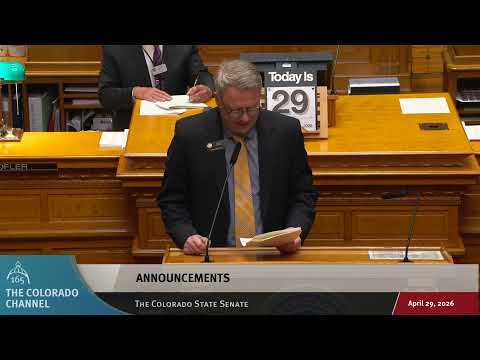
The Colorado Senate on April 29 laid over Senate Bill 70, a proposal that would have restricted government access to databases that store historical location information and license-plate reader (ALPR) data, after a prolonged floor debate that highlighted privacy and public-safety concerns.
Senator Zamora Wilson, a sponsor of the bill, framed the proposal as a constitutional safeguard. “This is a bill that safeguards our essential liberties from encroaching government surveillance,” she said on the Senate floor, urging colleagues to weigh the Fourth Amendment implications of long-term tracking of citizens’ movements.
Supporters cited court precedent and recent reporting about misuse. Zamora Wilson and others referenced U.S. Supreme Court decisions that require judicial oversight for invasive, prolonged location tracking and warned that centralized, long‑retention databases can reveal intimate details of daily life. Senator Henrison said modern ALPR and analytics systems can be used to target individuals and cited reported cases in other states in which plate‑reader systems were used to track women traveling for abortion care and to subject ordinary travelers to intrusive law‑enforcement scrutiny.
Opponents, including several law‑enforcement proponents and some members of the executive branch, argued that limitations could hinder investigations; sponsors countered that the bill was meant to preserve lawful investigative tools while adding judicial oversight and vendor controls. Sponsors also said the executive branch indicated it would veto provisions that imposed a warrant requirement, a point that shaped floor negotiations.
The Senate ultimately voted to lay SB 70 over until July 4, 2026. The motion to lay the bill over was made by the Majority Leader and adopted by voice vote. Supporters pledged to return with refined language and broader local support in the next session.
What’s next: SB 70 will remain on the calendar and sponsors said they intend to continue outreach to law enforcement and local governments before reintroducing the measure, while urging local bodies to adopt interim guard rails.