Get Full Government Meeting Transcripts, Videos, & Alerts Forever!
Get email alerts on the Parking Policy topic
No spam. Unsubscribe anytime.
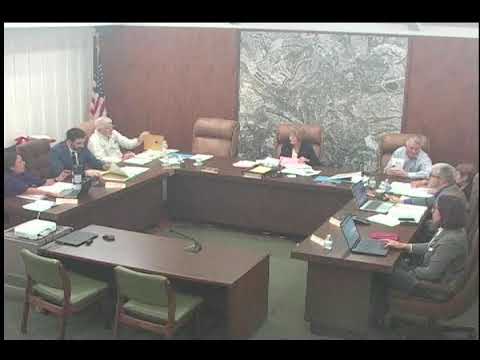
Rolling Hills council debates overnight‑parking rewrite and sends proposal back to traffic commission
Summary
After extended discussion about enforceability, safety and exceptions, council instructed staff to ask the traffic commission to combine the night‑parking and multi‑day rules into a clearer consecutive‑hours standard (staff were asked to consider a 48‑hour limit) and to explore a permit/pass process for approved long stays.
The council considered a traffic commission recommendation to revise Rolling Hills Municipal Code 10.52.210 (overnight parking prohibition). Christian Horvath, assistant to the city manager and city clerk, summarized the commission’s change: ‘‘No person shall stop, leave standing, or park any motor vehicle between the hours of 2:00 a.m. and 4:00 a.m. except for authorized emergency vehicles, city or association approved construction staging sites, and/or the vehicle of any regularly licensed physician when engaged in making professional calls.’’
Members questioned why the draft removed the phrase ‘‘on any road’’ and suggested clarifying language such as ‘‘on any road or roadway easement’’ and tightening exception language to read ‘‘currently licensed physician’’ and ‘‘while engaged in professional calls at the location.’’ Several council members expressed concern that the existing code was confusing and difficult to enforce: the current wording allows parking for up to one hour during the two‑hour window (2–4 a.m.), and a separate 72‑hour rule creates overlapping and inconsistent enforcement triggers.
Council debate focused on practicality and fairness across the city’s varied streets: narrow cul‑de‑sacs, equestrian trails, shoulder areas and stretches used for temporary construction staging. Multiple members argued that enforcement is complaint‑driven and that the sheriff marks tires and returns to determine whether a vehicle has remained; councilors therefore favored a simple, enforceable threshold for multi‑day parking rather than a one‑hour overnight rule.
After extended discussion the council voted to refer the matter back to the traffic commission with direction to consider consolidating the overnight provision and the consecutive‑parking rule into a single standard (staff were asked to consider a 48‑hour consecutive limit) and to develop a simple permit/parking‑pass mechanism that would allow the city to authorize longer stays for construction, utility work or temporary visitor needs. The motion passed with no recorded opposition.