Get Full Government Meeting Transcripts, Videos, & Alerts Forever!
Get email alerts on the Labor Policy topic
No spam. Unsubscribe anytime.
Residents, unions and public-safety officials urge Salisbury council to abandon plan to dissolve collective bargaining
Summary
Dozens of residents, union leaders and first responders urged the Salisbury City Council to reject a proposed charter amendment to eliminate collective bargaining and binding arbitration, saying it would worsen staffing shortages and threaten public safety; the council moved the measure forward for further consideration.
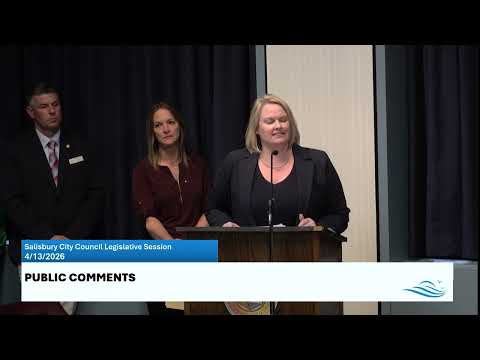
Dozens of residents, union leaders and first responders told the Salisbury City Council on Monday that a proposed charter amendment to eliminate collective bargaining and binding arbitration would damage recruitment and retention and increase public-safety risks.
Speakers who identified themselves as the State's Attorney, union presidents and career firefighters said dissolving the contractual protections would accelerate departures and raise long-term liabilities, despite the administration's argument that removing bargaining is a short-term budget fix.
The issue drew the largest public turnout in the meeting. Supporters of the existing labor code said the city should negotiate or pursue other revenue options — annexation and more development were suggested repeatedly — rather than remove workers' negotiated rights.
"If compensation is not competitive, if officers lose their voice, and if confidence in their future continues to erode, the cost will not show up neatly on a spreadsheet," the speaker identifying herself as the State's Attorney said, warning that vacancies, lowered standards and litigation would eventually surpass short-term savings. That speaker argued Salisbury's authorized police staffing was 93 with significant vacancies and that the department faces a recruiting disadvantage compared with neighboring agencies.
Fraternal Order of Police Lodge 111 President Scott Hamilton told the council the department currently has "approximately 13 vacancies" and urged officials to strengthen the bargaining process rather than eliminate it: "If officers lose their voice here, they won't stay here. And right now they have plenty of places to go."
Representatives of other unions reiterated that binding arbitration and collective bargaining are common across the state and that those tools can be used to manage costs without stripping workers of rights. David Marr of AFSCME Council 3 said arbitration is widely used by school and county employees and is not incompatible with municipal fiscal stability.
Speakers cited several local figures during testimony: one commenter said the city held a reserve of about $21 million in unassigned funds; others estimated an annual budget shortfall of roughly $2 million to $3 million. Molly Hilligoss, CEO of Habitat for Humanity of Wicomico County, urged officials to pursue housing- and tax-base growth as a revenue strategy rather than cut employee protections.
Opponents framed the move as a reversal of a prior policy choice: Megan Outten, a council member in 2023 who supported the labor code then, asked current members to "honor your own" vote and not roll back protections. Multiple speakers described personal experiences in which long-serving employees were moved back to starting pay grades prior to bargaining reforms.
Administration remarks during the meeting reiterated the city's fiscal constraints and announced upcoming budget work sessions on April 29–30. Council members said there is time to negotiate during the first-reading stage; Joe Venosa noted "this is a first reading" and urged good-faith discussions before any final action.
Council members publicly diverged on the issue. Several council members thanked speakers and said they oppose dismantling collective bargaining; others indicated they will continue to review fiscal projections and the administration's analysis. The council's discussion will continue at scheduled budget work sessions and subsequent public hearings.
Authorities and procedural status: speakers and commenters repeatedly referenced "the labor code," "binding arbitration," and specific past ordinances and agreements. A commenter cited a case number (C22CV25000 to 98) in relation to downtown litigation that, they argued, contributed to current budget pressures. Several speakers described the current status as a first reading; the council indicated it will hold further budget work sessions and a public hearing before any final change.
The council also handled unrelated, small budget matters during the meeting, which were moved forward by consensus. The public hearing on the charter amendment drew the sharpest debate and is likely to return for additional review and possible formal votes at a later meeting.
The council is expected to continue consideration during the scheduled budget work sessions and in a future public hearing.