Get Full Government Meeting Transcripts, Videos, & Alerts Forever!
Get email alerts on the Unified Development Ordinance topic
No spam. Unsubscribe anytime.
Gary planning committee advances unified development ordinance with new ADU, solar and design rules
Summary
At a committee hearing, Gary planning staff presented Ordinance 2026-16, a draft unified development ordinance that would add accessory-dwelling rules, solar and design standards, and a development-plan process; the measure is scheduled for final reading on May 19 and would change how projects are reviewed and permitted.
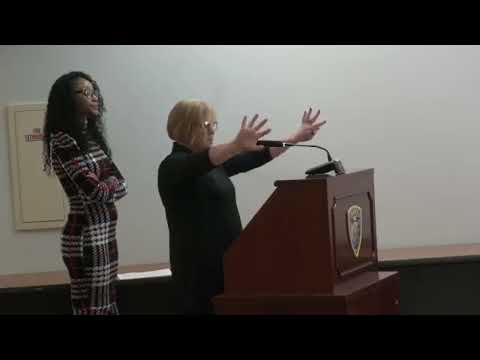
The Gary Common Council Planning and Development Committee reviewed a draft unified development ordinance (Ordinance 2026-16) that would update accessory-use rules, add design and solar standards, and create a formal development-plan review intended to streamline permitting for larger projects. Councilman at Large Darren Washington opened the meeting and turned the floor over to Corey Sharp, planning director, who said the draft aligns the code with the city’s comprehensive plan and is posted at gary.gov/planning.
"The purpose behind an ADU…is to create a secondary smaller dwelling unit on a single family lot," Corey Sharp said, describing accessory dwelling units as a tool to "increase our housing diversity and of course provide affordable options for our seniors, our students" while preserving neighborhood character. Sharp said accessory structures will be defined as incidental and subordinate (described in the draft as 50% of the primary structure) and will not be permitted without a primary structure on the parcel.
Council members pressed staff about short-term-rental use of ADUs; Sharp replied that ADUs are accessory to a primary structure and that state law considerations will guide enforcement and permitted uses. "When we are writing this the state legislation…it's for a primary structure," she said in response to a question about rentals.
Sharp also described new requirements for dumpsters (screening behind walls) and a permitting path for small solar installations. "Non-commercial" solar in the draft means owner-consumed rooftop or wall-mounted systems; Sharp said the draft requires neutral tones, no signage on panels, structural review and a specific solar permit to ensure safety.
The draft creates an explicit development-plan stage to collect site plans, landscape plans, building elevations and other technical materials early in the process so review by multiple departments can proceed in parallel. Sharp identified triggers embedded in the ordinance’s use matrix: for example, a manufacturing building over about 70,000 square feet would trigger additional review and an apartment development of 150 or more units would trigger a traffic study. She also said the draft asks for decommissioning plans for large utilities such as wind or solar farms.
Dr. Sylvia Martin, zoning administrator, walked council members through design standards the draft would impose by district, including district-specific sign limits, mandatory landscaping buffers, parking requirements based on lot square footage (including counting employee parking), and fencing setbacks aligned to neighborhood character to reduce the need for variances.
Sharp said the draft includes a 200-foot lake buffer and other community-requested elements. She closed by noting the ordinance will return for a third and final reading before the Common Council on May 19; Attorney Marco Molina said there is a delay before ordinances take effect and recommended the committee explicitly cite the promulgation period in the ordinance (staff referenced a 90-day delay in the discussion).
The meeting included one public commenter, Brian Seagars, a new homeowner who said he had filed a letter of intent with the redevelopment commission and thanked staff for their work on revitalization. The committee adjourned after discussing plans for an outreach forum for owners and prospective buyers in late May or early June.