Get Full Government Meeting Transcripts, Videos, & Alerts Forever!
Get email alerts on the Housing Policy topic
No spam. Unsubscribe anytime.
Council directs staff to pursue parcel‑level protections for Pico and develop a TOD alternative plan for SB 79
Summary
The council directed staff to implement a two‑track approach to the state’s SB 79 transit‑zone upzoning: adopt interim exclusions where legally allowed and develop a comprehensive TOD alternative plan (including testing density transfers) to protect vulnerable Pico neighborhoods from displacement.
Santa Monica’s City Council on Tuesday instructed staff to pursue a two‑track implementation strategy for Senate Bill 79 (SB 79), the recently enacted state law that creates guaranteed height and density for qualifying housing projects within a half‑mile of major transit stops.
Planning staff summarized SB 79’s automatic rules: eligible projects within a half‑mile of a qualifying transit stop (tier 1 or tier 2) can access elevated height, floor‑area, and density standards if they meet minimum unit counts and affordability triggers. The law also exempts certain sites automatically — for example, occupied deed‑restricted affordable units and buildings with three or more rent‑controlled units where demolition would be required.
The Planning Commission recommended a combined approach: adopt option two (time‑limited exclusions for parcels that meet statutory criteria) to protect at‑risk residential parcels immediately, and concurrently create a TOD alternative plan (option three) that would allow the city to shift the same amount of permitted capacity to locations where housing near transit will actually be developed. The commission urged a parcel‑by‑parcel exclusion list, special legal and AFFH (affirmatively furthering fair housing) analysis for the Pico neighborhood, and testing of any density transfer to ensure it yields real units rather than “paper density.”
Planning Commissioner Sean Landris summarized the commission’s view: “Pico deserves dedicated legal and planning analysis, not treatment as a footnote,” and urged that any density transfers be tested to produce actual homes near transit rather than simply increase zoning numbers.
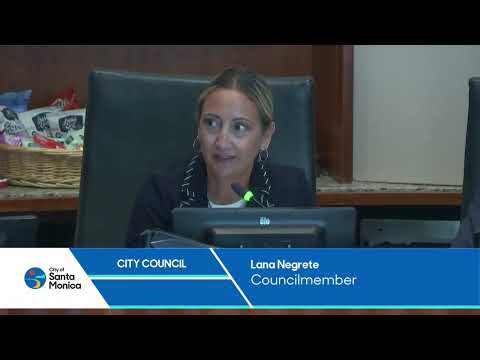
Council members said they wanted maximum local control and more time to get the tradeoffs right. Council adopted a motion directing staff to craft an ordinance implementing approach two as rapidly as possible to delay automatic SB 79 upzoning for eligible parcels where the statute permits, while preparing an alternative TOD plan (approach three) to be considered in parallel. The council also directed staff to prioritize an expedited look at the Expo/Bundy corridor area, where jurisdictional overlaps with Los Angeles raise special questions about how capacity is calculated.
Staff will submit technical questions to the California Department of Housing and Community Development (HCD) about the SCAG mapping process, treatment of bus stops and dedicated bus lanes, cross‑jurisdictional capacity calculations (Expo/Bundy), and whether incremental changes in transit frequency can create new qualifying stops. HCD has up to 120 days to review any local alternative plan once submitted; staff emphasized the city will need to coordinate carefully and return to council with specific ordinance language and legal analysis.
Next steps: staff will prepare a draft ordinance to implement option two for council consideration and proceed with a site‑level study and legal analysis needed to construct an SB 79 TOD alternative plan; staff will return with a status update to the council in months to come and will seek HCD clarification on the cross‑jurisdiction questions.