Get Full Government Meeting Transcripts, Videos, & Alerts Forever!
Get email alerts on the Budget topic
No spam. Unsubscribe anytime.
Providence district outlines $16.5M starting gap for FY27, eyes cuts and reserves
Summary
Deputy Superintendent Zach Scott told the board that an $18.2M projected expense increase and modest revenue growth produced an initial FY27 gap around $16.5M; the district proposed cuts, operational efficiencies and use of $2.6M in reserves and warned of steep transportation, special‑education and benefit cost pressures.
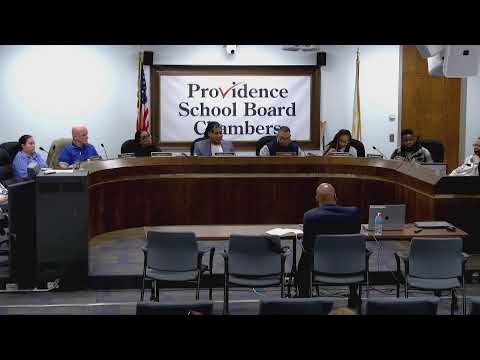
Deputy Superintendent of Operations Zach Scott and the district finance director presented an updated FY27 budget picture to the Providence School Board on April 29, saying the district faces significant headwinds but expects to bring a balanced budget to the board in May.
Scott said the district’s forward‑rolled expense baseline reflected an estimated $18.2 million increase — largely cost‑of‑living and benefit growth — while projected revenue rose by roughly $1.7 million, producing an early gap near $16.5 million.
“To get a starting number we rolled forward this year’s budget and did not make substantive changes,” Scott said, adding that the district’s local budget is north of $450 million and that a 3% cost‑of‑living increase would itself account for roughly $13–14 million of the rise.
To close the gap, staff outlined school‑based reductions driven by enrollment declines (concentrated at middle and high schools), about $2.6 million of proposed central‑office reductions, and operational efficiencies including transportation routing, negotiated cuts in interpretation/translation costs and changes to bell times to share buses between campuses.
Even after those reductions and identified revenue offsets the district said it would face a remaining gap near $2.6 million. Officials proposed using a portion of reserves to close that gap — roughly $2.6 million of approximately $4.1 million available — while continuing to prioritize investments tied to board goals (reading and math platforms and two reading specialists).
Scott cautioned that recent bid returns and cost escalations have worsened the picture. “Transportation services have come back far higher than we originally anticipated,” he said, reporting bids in the 10–15% increase range rather than the 5% projected. He also said special‑education tuition rates are rising in many placements by 8–13% and that medical insurance costs may rise between 8% and 10% next year, all of which would increase pressure on the FY27 plan.
The budget presentation estimated about 100 FTE reductions across funding sources under the current draft plan, primarily at middle and high school levels, with some elementary growth tied to four preK–8 sites adding grades. Scott emphasized the figure is a planning estimate and the final FTE and school-level allocation will be released with the appropriation ordinances in May.
Board members asked about the sustainability of using reserves and about long‑term strategies to reduce out‑of‑district tuition and transportation costs. Scott and the finance team said they preferred to preserve reserves for emergencies but did present a balanced plan that used a portion of reserves rather than making deeper cuts that could affect core services.
What’s next: staff said they will present the full FY27 appropriation ordinances in May including site‑level position counts, and that additional steps — hiring delays, temporary freezes, or further programmatic reductions — remain on the table if state or enrollment numbers change.
Votes or formal action: none taken on the FY27 planning presentation; the board scheduled to consider final appropriation ordinances in May.