Get Full Government Meeting Transcripts, Videos, & Alerts Forever!
Get email alerts on the Energy Storage topic
No spam. Unsubscribe anytime.
Developers pitch 5 MW battery storage at Broadway site, tout safety upgrades and low noise
Summary
Developers proposed a five‑module, ~5 MW AC battery energy storage system at 3695 Broadway, saying modern containerized designs, lithium iron phosphate chemistry, gas monitoring and training for the fire department will limit safety risks. Neighbors raised noise, visual screening and fence-height concerns; the project needs DEC approval and a variance for a 7-foot fence.
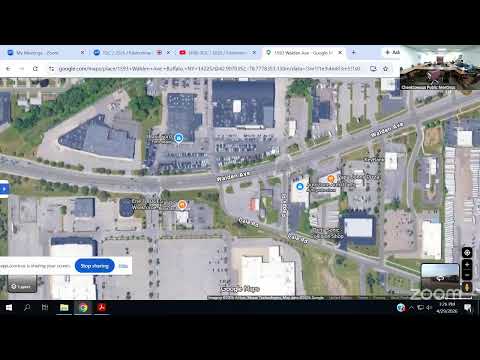
Developers are seeking town approval for a five‑module battery energy storage system with a total grid capacity of about 5 megawatts at 3695 Broadway, presenting it to the Environmental Advisory Committee on April 29.
The project team said the approximately 7.05‑acre site is a constrained, contaminated parcel regulated by the state Department of Environmental Conservation and that the plan impacts roughly two acres of the property. "We do need DEC approval for any change of end use of the property," project attorney Peter Sorg said, noting DEC cooperation to date.
Why it matters: proponents said the storage system can help utilities quickly dispatch energy during short demand spikes, easing peak demand charges for consumers, while repurposing a site of limited alternative uses.
Project safety and operations: the team described multiple layers of fire protection, including weatherized containers, in‑container gas monitoring, use of lithium‑iron phosphate battery chemistry (which developers called safer than some conventional lithium‑ion chemistries) and commitments to provide training and equipment for the town fire department. "The batteries themselves, we are trying to use a safer chemistry than the lithium ion batteries that we have in our cell phone," the project representative said, adding the company would adhere to relevant codes and standards.
Containment and environment: committee members asked specifically about fire‑suppression retardants and whether those materials could runoff into contaminated soils. The project team said retardant formulations vary by supplier but that modern containerized systems are designed to capture retardant within the container and minimize on‑site runoff; DEC review was highlighted as an additional safeguard for the brownfield site.
Noise, visuals and siting: the developers said refinements since earlier reviews reduced the number of container units and pushed them about 40 feet farther from nearby residences. They reported sound‑modeling results that place expected decibel levels below the town's 50 dB ordinance (estimates cited around 35–40 dB at parcel boundaries). The plan includes slatted green fencing and landscaping and requests a variance to allow a 7‑foot fence without barbed wire to meet National Electric Code clearance recommendations.
Lifecycle, recycling and expansion: the team said battery modules are modular and could be swapped in the future but that they do not plan to mix chemistries on site; they estimated a service life of roughly 30–35 years and said the design could discharge for about four continuous hours at full charge. Developers said no expansion is planned and that an interconnection agreement limits current capacity.
Next steps: the project will return to the planning board with revised site plans, seek DEC sign‑off for change of end use and pursue a zoning variance for fence height; the committee asked for additional engineering details on driveway and curb‑cut changes and confirmed continued coordination with DOT and emergency services will be required.
Ending: the committee did not take a final vote and expects the project to return after the team submits revised plans and the required agency reviews.