Get Full Government Meeting Transcripts, Videos, & Alerts Forever!
Get email alerts on the Flood Mitigation topic
No spam. Unsubscribe anytime.
Councilman Hansen proposes goat grazing to clear creek channels, reduce flood and fire risk
Summary
Councilman Hansen described a three‑month trial using roughly 150–300 goats to clear vegetation along Kilpeker Creek in an effort to lower downtown Rock Springs’ flood and fire risk; the city will study results and is pursuing grants while balancing other budget priorities.
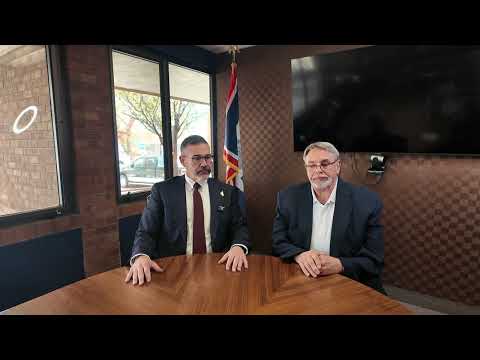
Councilman Hansen, a member of the Rock Springs City Council, outlined a three‑month pilot using goats to clear vegetation from creek channels that he said contribute to downtown flooding and increased fire risk.
"They're going to use approximately 150 to 300 goats," Hansen said, describing the pilot along Springs Drive and Kilpeker Creek from Interstate 80 to the area behind Rock Springs Honda Toyota, roughly a mile and a half in length. The contractor-run project is planned for April through June, and fenced study areas will be monitored to provide data on effectiveness.
Hansen framed the goat grazing as a lower‑cost, lower‑impact alternative to heavy equipment or chemical treatments. He said past chemical efforts drew Environmental Protection Agency attention and that the city wants to avoid poisoning creeks. He also noted that some heavy machinery cannot access narrow channels and that manual clearing using weed whackers is labor intensive, requires replanting native species and carries liability and age‑restriction issues: "they have to be 18. They're not statutorily allowed to do it if they're under 18," he said.
The councilmember said the goats offer multiple benefits beyond vegetation removal, including lowering fire risk by reducing overgrowth, removing habitat for mosquitoes and rodents, and helping creek flow by trampling and packing the bed and banks. He said a prior Colorado contractor opened portions of Bitter Creek in an earlier trial, and the city has since used a local contractor from Parson.
Hansen credited Representative Hegelman with securing $5 million to continue the larger Bitter Creek mitigation effort aimed at moving a section of town out of the flood plain. He also referenced an unexplained figure — "92,000" — during the discussion; the transcript did not specify what that number referenced.
Hansen said the goat pilot is intended to produce "hard facts" about effectiveness so the council and public can evaluate the approach. He emphasized that council discussions and votes are public and invited residents to raise other channel‑cleanup ideas at council meetings.
Hansen acknowledged budget trade‑offs: next year’s draft budget reduces routine channel maintenance because the city identified rotten bases on cemetery lamp posts that pose public‑safety hazards and require repair. He said the city is pursuing grants to fund goat grazing because the approach can be cost‑effective while larger mitigation projects continue.
The moderator thanked Hansen for bringing the idea forward; Hansen said he hopes the pilot will reduce damage from floods and fires while the longer‑term Bitter Creek project proceeds.