Get Full Government Meeting Transcripts, Videos, & Alerts Forever!
Get email alerts on the Education Literacy topic
No spam. Unsubscribe anytime.
Costco volunteers tutor Jurupa Unified students; school staff say parent class boosts reading skills
Summary
Costco employee volunteers meet regularly with fourth- through sixth-graders in Jurupa Unified schools and lead a parent 'Family Stories' literacy class; school staff say about 35 volunteers and a monitored parent cohort are helping students practice citation and discussion strategies at home.
Angelina Aguilera, principal at Mission Bell Elementary, said Costco employees have been volunteering as reading tutors for older elementary students in Jurupa Unified and that the program has grown into a broader family-engagement effort. "When I found out that Costco was giving back their time to Jurupa Unified, I was like: 'Perfect!'" Aguilera said.
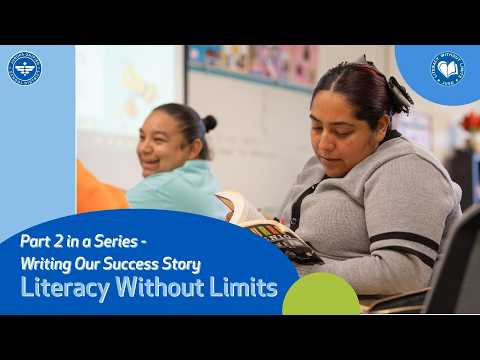
Michelle Rodriguez, the community school teacher at West Riverside Elementary, described a parent-focused 'Family Stories' class designed to give caregivers tools to support reading at home. "The objective of this class is to prepare parents, give them the tools that they need," Rodriguez said, adding that the class teaches strategies such as preparing the reader, partner work and Socratic seminars so parents can help children cite evidence and participate in class discussions.
Volunteers and students gave concrete examples of how the program works. "I just wanted to see what it was about, and I fell in love with it," said Costco volunteer Carlos Ortin, who identified himself as a depot supervisor. He and other volunteers said they meet with cohorts of fourth- to sixth-grade students, mentor them over multiple years and have seen measurable gains during short program cycles.
Students interviewed described the sessions as both fun and instructional. Juliana Rubio said tutors "teach us how to write, how to say things, how to read books or sentences," while a fifth-grader, Damian Hernandez, said tutors read books with the class and "some are funny." Participants and staff emphasized bilingual materials so English learners can engage in Spanish and English.
Rodriguez said school staff track participation and use data to check for changes in student engagement and performance. She said roughly 18–19 parents have participated in the monitored cohort and that teachers are helping staff observe whether students provide better-justified answers and participate more in class; Rodriguez said she is monitoring seven students closely as part of that effort.
Program leaders stressed community and continuity as core benefits. Aguilera noted that having consistent adult volunteers "is a good opportunity to check in with the student one on one in addition to practicing literacy skills." Volunteers also support campus efforts such as backpack drives and an end-of-year recognition that includes a pizza party.
School staff and volunteers framed the initiative as a way to extend evidence-based classroom strategies into homes, particularly for families of English learners. Rodriguez said parents "didn't want to talk" at first but that the class has increased their willingness to participate and to use text evidence in discussion, which teachers report is translating into improved class participation.
The program is ongoing at several schools in the district; staff said it began as a pilot focused on younger students and was expanded to older grades after principals and teachers identified a need. Exact program figures cited in interviews included "about 35" volunteers and an enrolled parent cohort of about 18–19 adults; staff said more precise counts and longitudinal outcome data were not specified in the interview.
Next steps described by staff include continued parent classes, volunteer mentoring across years and ongoing monitoring of student responses to the home-based strategies. The school leaders plan to continue the partnership with community volunteers and to publicize the family's work in district outreach materials.