Get Full Government Meeting Transcripts, Videos, & Alerts Forever!
Get email alerts on the Dissident History topic
No spam. Unsubscribe anytime.
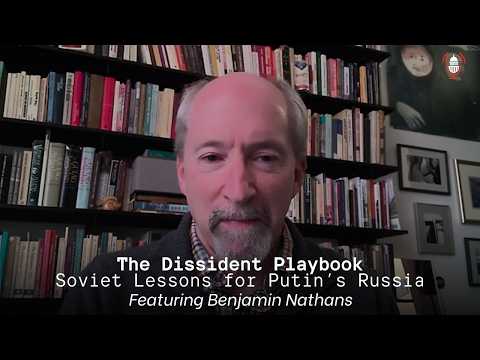
Historian Benjamin Nathans: Soviet dissidents offer lessons for today’s Russia and the West
Summary
On the Helsinki Commission podcast, historian Benjamin Nathans compared Soviet-era dissidence with contemporary Russia, warned that mass repression today differs by form not only severity, and urged renewed U.S. support for transnational broadcasts to reach isolated Russians.
On the Commission on Security and Cooperation in Europe podcast The Transatlantic, Benjamin Nathans, the endowed Turn Professor of History at the University of Pennsylvania, said the late-Soviet dissident movement offers practical lessons for dissidents and policymakers confronting today’s Russia.
Nathans contrasted two very different Soviet eras and said comparisons with Vladimir Putin’s Russia depend on which period is invoked. "It really depends on which Soviet Union," he said, noting the Stalin-era Gulag and mass deaths are not being replicated today though the government has other tools to suppress opposition. He added that roughly "about a million" Russians fled after the 2022 invasion, a flow that removed many potential domestic critics.
Why this matters: Nathans framed dissidence as rooted less in profession or identity and more in moral crisis — people who refused to collaborate with the security apparatus or to live with what they saw as a compromised version of themselves. He said dissidents historically used creative methods—samizdat texts and shortwave broadcasts—to communicate inside a closed society, and those mechanisms helped generate international attention.
Nathans also warned that modern communications are under threat in Russia. "Their access to each other through social media is increasingly being blocked," he said, calling the internet takeover a loss of the "last oasis of free speech." He argued that the emigration of opposition-minded Russians and increasing online controls have blunted the development of an organized domestic movement.
On U.S. policy and information tools, Nathans criticized recent budget cuts to international broadcast services. "The slashing of funding to these broadcast services by the U.S. government, and in particular Radio Free Europe and Voice of America, is a catastrophically bad decision," he said, adding that shortwave and other alternative channels remain vital if internet access is curtailed.
Nathans discussed the composition and motivations of Soviet dissidents, including the notable — but complex — overrepresentation of Jews in the movement. He urged caution in drawing simple causal links from background to dissent, saying many dissidents were motivated by conscience and specific moral dilemmas, not by a single identity factor.
The conversation closed with a broader appeal about democratic practice: Nathans said the United States and its allies must both "walk the walk" at home and speak deliberately about democratic values abroad, because credibility depends on practicing the standards one promotes.
The interview was recorded remotely; Nathans’s book, which traces the dissident movement, won the 2025 Pulitzer Prize for General Nonfiction.