Get Full Government Meeting Transcripts, Videos, & Alerts Forever!
Get email alerts on the Local Government topic
No spam. Unsubscribe anytime.
Lacey leaders outline $225 million budget, parks and housing priorities at advisory-board forum
Summary
Mayor Andy Ryder and City Manager Rick W. told advisory-board chairs and residents about Lacey’s roughly $225 million 2026 budget, major parks and public-safety projects, a $3.8 million-a-year transportation benefit district whose voter-approved funding expires in 2027, and demand for a $300,000 human-services grant.
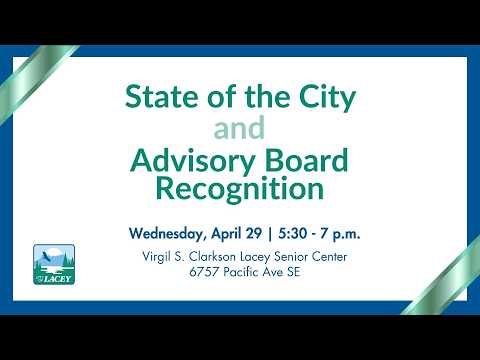
Mayor Andy Ryder opened the city’s advisory-board forum by framing Lacey as a community whose residents are “shareholders” in local government and noting the city’s recently adopted budget. “We just adopted with all of our different funds, about a $225 million budget,” Ryder said, urging volunteers to stay involved in advisory boards that help guide council decisions.
City Manager Rick W. gave a 15-minute overview of priorities and finances, saying the city serves more than 60,000 residents across roughly 28 square miles and that the General Fund is roughly $74 million while utility funds make up the largest portion of the overall budget. He emphasized that sales tax is the city’s largest but most volatile revenue stream and that salaries and benefits account for about two-thirds of General Fund spending. “This growth both brings opportunity and responsibilities,” Rick W. said, describing a three-part financial strategy of revenue enhancement, economic initiatives and expenditure control.
Rick W. highlighted infrastructure and capital projects under way or planned: a new police station with community spaces, a roughly 15,000-square-foot regional training facility, expanded synthetic turf and lighting at the regional athletic complex, and several park improvements including a new inclusive playground with a soft opening anticipated in mid-May. He also described Midtown-area development—new apartments and commercial spaces—that staff say will add housing and downtown amenities.
On transportation, Rick W. told attendees the transportation benefit district currently provides about $3.8 million a year for street and sidewalk maintenance but noted the voter-approved sales-tax funding is set to expire in 2027 unless voters renew it. He stressed the sidewalk program’s recent $1.3 million investment to repair severely deteriorated sections and replace trees where roots had damaged walkways.
Representatives of nine advisory bodies then introduced their boards and highlighted current work. Jeff Gadman, chair of the Planning Commission, described state-mandated changes the commission has implemented—such as middle-housing conversions and standards for co-living—and said the commission is also working to protect mobile-home communities and strengthen tree requirements. “We do open houses and public hearings where what you say impacts us because your public comments come into every decision we make,” Gadman said.
Aaron Wheeler, chair of the Parks, Culture and Recreation Board, reviewed recent park projects and said funding remains the board’s primary constraint. The Human Services Commission reported it distributed a $300,000 city grant in 2024–25 and faced more than 20 applications requesting about $841,000. Brandon Stevens of the Human Services Commission said the grants supported partner organizations offering housing assistance and services for low-income residents.
The Equity Commission’s chair, Thelma Jackson, described the commission’s three-year plan and emphasized implementation and community outreach to identify pockets of inequity. The Historical Commission and Library Board chairs described preservation and capital-facility work, respectively, and a lodging-tax representative outlined the application cycle for tourism-related funding. A youth representative from the Youth Council said members meet twice monthly with the council and are working to increase youth participation in city planning.
During Q&A, board chairs encouraged residents to attend meetings, volunteer and use televised meetings or video-on-demand if unsure where to start. The meeting closed with staff thanking volunteers and communications staff and inviting continued engagement as long-term projects move forward.
The forum produced no formal motions or votes; it was an informational session focused on priorities, programs and volunteer recruitment.