Get Full Government Meeting Transcripts, Videos, & Alerts Forever!
Get email alerts on the Transit Funding topic
No spam. Unsubscribe anytime.
Residents and Valley Transit warn proposed cuts would strip essential rides and federal match
Summary
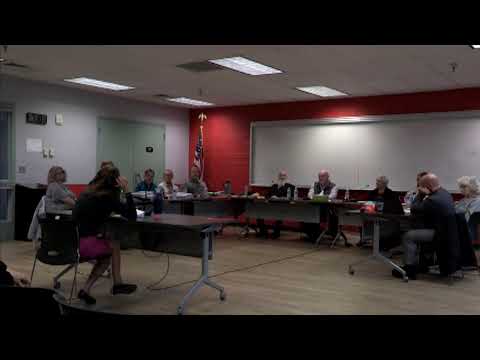
At a special April 28 Matanuska-Susitna Borough Assembly meeting, dozens of residents urged the Assembly to reverse proposed cuts to Valley Transit funding, warning a 25% local reduction would eliminate federal matching funds and critical rides for dialysis patients, seniors and commuters.
Valley Transit’s executive director told the Matanuska-Susitna Borough Assembly on April 28 that a proposed local reduction in transit support would cost the borough federal funding and service hours while residents and drivers described immediate harms to medical riders, seniors and commuters.
"With the 25% reduction, it's about another $500,000 or half a million of FTA funding that we won't get," Jennifer Bush said, estimating that "it's $750,000 total services that won't be provided to the MATSU anymore." Bush briefed the Assembly on how Valley Transit operates a commuter fixed-route to Anchorage and a local demand-response service inside the valley, and why transit fares cover only a small portion of operating costs.
Public commenters echoed that warning. "A lot of our passengers are medical patients...these are life-critical procedures three times a week," said Valley Transit driver Brian McDerman, urging the Assembly to "reconsider the 25% deficit for funding for Valley Transit." Margaret Provost, who said she is disabled, added that cab fares are prohibitive: "I can't afford $50 one way. I'm on a fixed income."
Bush told the Assembly demand-response trips are zone priced and farebox revenue covers only about $200,000 of a nearly $3 million operating budget. "Our commuter service accounts for about 80% of our farebox revenue," she said, while demand-response delivers the majority of rides inside the valley. She warned that cutting local match reduces eligibility for federal reimbursement: "Because farebox revenue does not cover the cost to operate public transit...with the 25% reduction, it's about another $500,000 of FTA funding that we won't get."
Assembly members pressed for data and for operational detail. Bush offered to provide multi-year ridership breakdowns by commuter and demand-response service and quarterly reports. She also explained why implementing a fixed-route neighborhood network would be expensive and could trigger ADA paratransit obligations: "If there was a fixed route we would have to offer that demand-response service...we'd have to expand our demand-response service to have that fixed route." She argued that given the borough’s geography, demand-response is currently the most cost-effective way to provide the greatest number of rides.
Several Assembly members raised that the borough recently lost a $750,000 state contribution after the area became urbanized; Bush said that change—and a late RFP timeline—reduced available state support. The Assembly also asked whether Valley Transit could absorb displaced school trips during an ongoing school-bus strike; Bush said transit provides unscheduled rides and has increased waitlists but lacks capacity to fully substitute for contracted school transportation.
Bush described existing partnerships and targeted assistance (Connect Mat-Su, Youth 360, VA, the Center for the Blind and prepaid fare accounts) as ways to help riders who cannot afford fares, but she urged the Assembly to weigh the economic consequences of service cuts: "If you follow through with reducing public transit service, you're supporting children of working families not being able to participate...seniors won't be able to live here independently." She described a local return-on-investment case: local transit investment, she said, typically produces $3–$5 in economic return per dollar invested.
The Assembly did not take a final vote on transit funding at the meeting; members asked for additional ridership data and for the Valley Transit executive director to return with supplemental materials at the continuance of the budget hearing scheduled for April 30.
The transit discussion is expected to continue at the Assembly’s special meeting on April 30, when staff will present detailed budget figures and the Assembly will consider whether to alter the proposed local match that supports Valley Transit.