Get Full Government Meeting Transcripts, Videos, & Alerts Forever!
Get email alerts on the Labor Relations topic
No spam. Unsubscribe anytime.
North Andover officials propose new FTE and scheduling changes as teaching assistants press for higher pay
Summary
At a School Committee negotiations session, district leaders proposed standardizing a 1.0 FTE at 35 hours and greater scheduling flexibility to match student needs; teaching-assistant union presenters countered with town fiscal figures and testimony urging higher wages and staffing investments.
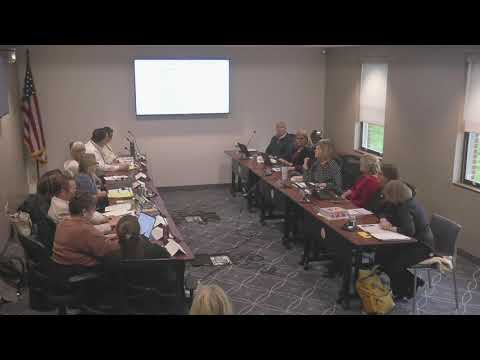
The North Andover School Committee negotiations subcommittee and representatives of the teaching-assistant bargaining unit met to continue collective-bargaining discussions, with the district outlining proposed changes to FTE definitions, workday schedules and attendance rules and union representatives presenting fiscal data and worker testimony calling for higher pay.
District representatives framed their presentation as an effort to align staffing to student needs and to create a consistent basis for employment classifications. "The North Andover School Committee and the district leadership value the important role that teaching assistants play in our schools every day," Miss Cormier said, asking the meeting to focus on both the contributions of TAs and the district's operational needs. Superintendent Lethre detailed role definitions (general-education TAs, special-education TAs, specialized-program TAs and health aides) and argued the district needs flexibility to assign staff as student needs change.
The district highlighted schedule mismatches it says create supervision gaps. Officials noted that bus arrival and homeroom times often precede current TA start times at multiple buildings, leaving students without the consistent TA support the district says they need during morning transitions. "There are gaps in supervision during these critical morning arrival and transitional periods that we would like to address," Superintendent Lethre said.
On the full-time-equivalency issue, the district said existing practice is inconsistent across buildings and proposed a clearer standard. "The proposed change is that a 1.0 would be 35 hours a week," Superintendent Lethre said, explaining that other FTEs and benefits would be prorated from that baseline. District officials framed the proposal as a path to both schedule alignment and retaining staff by enabling fractional FTE adjustments rather than layoffs.
Union representatives pushed back on the timing and consequences of the proposed changes. Casey Kaplas, a program teaching assistant, asked whether the district had data on how many TAs take unpaid days and raised concern about accountability and fairness in attendance rules. "I can't imagine. I don't — I've never taken a day without pay," Kaplas said, asking for clarity on the scope of unpaid leave among unit members.
Debbie Rafali, speaking for the bargaining unit, disputed the district's characterization of part-time hiring history and said the union has not refused routine requests to accommodate staff. "In our last contract, we put in by a request from administration the ability to hire part-time. To date there has been one request and it was not to hire a part-time TA," Rafali said, adding that the union had on at least one occasion denied a request to reduce an individual's hours when it would have cut student support.
Union presenters also spent much of the session laying out municipal fiscal figures to argue that the town has the capacity to increase compensation. Debbie Rafali and other union speakers said North Andover’s excess levy capacity rose from about $1.85 million in 2024 to roughly $5.44 million in 2026, and a union presenter reported roughly $9.5 million in free cash plus two stabilization funds the presentation described as approximately $7 million and $9 million. "We have 9.5 millions in free cash," Juliet told the committee during the presentation.
The union contrasted those town reserves with what it described as low TA pay and recruitment/retention problems. Presenters cited a living-wage estimate for North Andover teaching assistants of roughly $66,000 a year and national data on educator burnout and turnover to frame a retention argument. Multiple TA speakers gave personal testimony about juggling multiple jobs and struggling to afford housing in town, and they urged the committee to invest in staffing and compensation.
Neither side presented a written final proposal or recorded a vote at this session. Both parties agreed to continue bargaining: negotiators caucused briefly during the meeting and scheduled the next session for Monday, May 11 (5–7 p.m.). Organizers also noted a public community chat May 9 at Stevens Memorial Library and the annual town meeting May 12 at 6:30 p.m.
The session left several clear open items: whether the committee will formally propose a 35-hour 1.0 FTE, how an updated schedule would affect individual TA earnings and benefits, and the degree to which the town’s reserves would be factored into any offer. Negotiators said they will return to the table to exchange written proposals and to pursue data-driven work on schedules, FTE definitions and attendance documentation.