Get Full Government Meeting Transcripts, Videos, & Alerts Forever!
Get email alerts on the Land Use SB79 topic
No spam. Unsubscribe anytime.
Planning Commission votes 5-1 to advise Council not to adopt SB79 temporary exemption
Summary
After an extended debate about preserving downtown design standards versus accelerating housing production, the Planning Commission voted 5-1 to recommend City Council not adopt a temporary exemption from SB79 and asked the Council to direct staff to study SB79's local impacts.
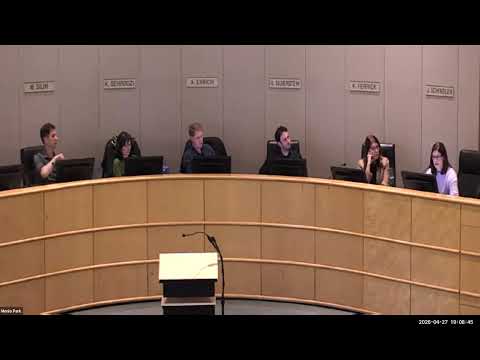
After a multi-hour policy debate on April 27, the Menlo Park Planning Commission voted 5-1 to advise the City Council not to adopt a temporary local exemption that would exclude downtown-specific plan sub-districts from Senate Bill 79, the Abundant and Affordable Homes Near Transit Act.
Assistant Community Development Director Kyle Parada presented staff's recommended approach: adopt a temporary exemption ordinance to preserve the downtown-specific plan's locally adopted design standards (setbacks, step-backs, ground-floor transparency and modulation) and give the Council time to consider a TOD alternative plan or other zoning changes. Parada said the exemption would apply to the Downtown, Station Area West, Station Area East, El Camino Real Southeast and El Camino Real Northeast Residential Emphasis sub-districts (with a correction clarifying that parcels within 200 feet of some station entrances are not eligible for exemption).
Commissioners divided along familiar lines: proponents of the exemption argued it preserves the design and pedestrian qualities of the downtown core and allows time to craft a locally tailored approach, while opponents said the city must prioritize faster realized housing and that SB79 might be necessary to achieve regional housing goals (RHNA). City Attorney Nira Doherty advised that an exemption ordinance preserves local standards when adopted but that state law preempts local rules if the city takes no action; she also said a meaningful TOD alternative plan would require an involved capacity study and could take many months.
Public comment at the hearing included Paul Roberts, who urged the Commission to embrace SB79 and streamline zoning to increase supply. Opponents of the exemption warned that delaying SB79 could risk missed opportunities for near-term housing production; supporters warned that the loss of local controls could erode ground-floor retail, public-realm standards and negotiated community benefits.
Motion and vote: Commissioner Schindler moved that the Planning Commission recommend City Council not adopt an ordinance excluding any zoning district from SB79 and that Council direct staff to study the impacts of SB79. The motion passed 5-1 (Commissioner Farrick voted no). Vote recording (as spoken during the meeting): Commissioner Baruzzi, yes; Commissioner Farrick, no; Commissioner Schindler, yes; Commissioner Sillen, yes; Vice Chair Silverstein, yes; Chair Andrew Eric, yes.
The Commission's recommendation and the record of the robust discussion will be forwarded to the City Council for the May hearings staff identified; Council is scheduled for March through May hearings and the ordinance (if pursued) would return to Council for first reading on May 12 and second reading on May 19 under the staff-proposed schedule.