Get Full Government Meeting Transcripts, Videos, & Alerts Forever!
Get email alerts on the Housing Anti Displacement topic
No spam. Unsubscribe anytime.
Menlo Park unveils draft anti-displacement plan, prioritizes rental and legal assistance
Summary
City staff presented a draft anti-displacement plan that organizes 23 community-proposed strategies under four "P" pillars. Staff recommended near-term action on rental assistance and tenant legal aid, with implementation work starting in late 2026; commissioners and residents urged protections for renters during building electrification and a rent registry was proposed.
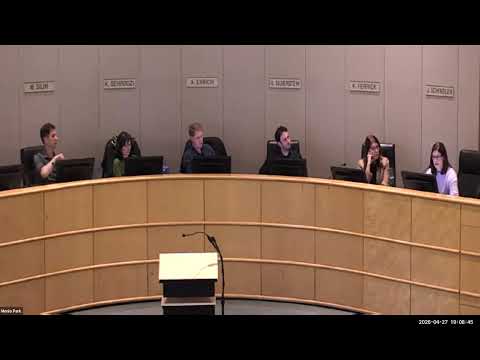
Menlo Park's Housing Manager, Tim Wong, presented the City's draft anti-displacement plan to the Planning Commission on April 27, outlining a multi-year approach that bundles roughly 23 community-suggested strategies into four pillars: production, protection, preservation and prosperity. Wong said staff will prioritize a rental assistance program and a tenant legal-assistance program, backed by grants, with implementation anticipated in the fall or late fall of 2026.
The plan grew out of community input gathered during the housing element and environmental justice element processes and subsequent outreach in 2024 and 2025. Wong told commissioners the city also consulted housing experts and the Housing Commission; the materials presented showed options ranging from a rent registry to extending relocation assistance and exploring tenant opportunity-to-purchase programs.
Residents who addressed the Commission broadly supported the plan. Angela Evans, director at Menlo Spark and a Menlo Park resident, commended staff and urged guardrails to protect renters as building electrification accelerates. "Replacements of gas appliances with electric versions do not meet the state's definition of a substantial remodel," Evans said, and she asked the city to make clear that such work should not be used as a pretext for just-cause evictions. Evans also urged program rules that prevent landlords from passing subsidy costs onto tenants and asked that threats or evictions tied to electrification be made explicit in an anti-harassment ordinance.
Another resident, Miyko Harris-Parker of Belhaven, asked whether staff will request additional staffing to implement the plan. Wong replied staff is not recommending new ongoing positions at this stage but intends to launch the rental and legal assistance programs first and monitor capacity before scaling other measures. Commissioners repeatedly pressed for timelines and for more quantitative information on the drivers of displacement; Wong said displacement is often informal and difficult to quantify, but that rent increases outpacing incomes strongly suggest financial displacement is a major driver.
Commissioners also discussed a rent registry as a longer-term project (staff estimated one to two years to establish a registry), the role of workforce development partnerships (for example with community colleges), and coordination between planning and housing staff to alert renters when redevelopment proposals affect their buildings. Several commissioners expressed support for moving quickly on rental assistance and legal aid while reserving full consideration of larger or more resource-intensive proposals.
The presentation and public comments closed with staff noting the draft plan will go to the Housing Commission on May 6 for review and then to City Council on May 19; staff said work on rental and legal assistance programs has already begun at a grant-funded level and that further items will be phased in depending on departmental bandwidth and funding.