Get Full Government Meeting Transcripts, Videos, & Alerts Forever!
Get email alerts on the Public Comment topic
No spam. Unsubscribe anytime.
Residents press Richland County commissioners over criminal records and constitutional claims during public comments
Summary
Public commenters raised concerns about individual criminal records and broader constitutional claims that Ohio charging practices are unlawful; commissioners said the board lacks judicial authority and urged speakers to pursue legal remedies.
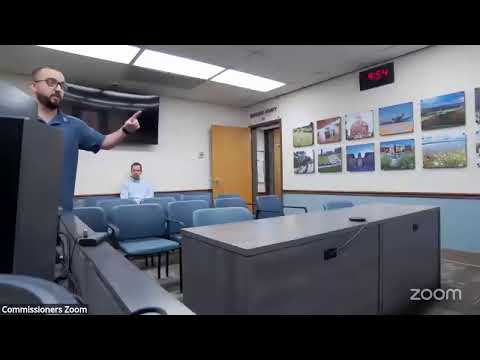
During the public-comment portion of the Richland County Board of Commissioners meeting on April 30, several speakers raised legal and constitutional concerns and asked the commissioners for help.
An unidentified resident said a conviction on their record — which they said has lasted about four years — led to a recent job loss. The speaker asked how to have the record cleared; commissioners responded the board has no judicial authority and recommended seeking outside legal counsel. “We are not a judicial board,” a commissioner said, adding the county oversees budgeting and administrative duties rather than court proceedings.
Rayan Arington, who identified himself as a civil rights advocate from Manford, Ohio, argued that Ohio’s practice of charging by information rather than by grand jury indictment is unconstitutional and alleged that the state has enacted and enforced laws that violate the U.S. Constitution. He said litigation is being prepared to take the matter to the U.S. Supreme Court on behalf of hundreds of thousands of incarcerated people. Commissioners responded that they disagreed with his legal conclusions, reiterated the board’s limited authority over courts and criminal prosecutions, and advised pursuing court remedies.
“Where the Constitution is silent under the 10th Amendment, those powers not expressly reserved … fall to the states,” one commissioner said in response, noting the legal disagreement and declining to take action the board lacks authority to provide. Commissioners also reminded speakers of the three-minute public-comment limit and noted they would take the remarks under advisement.
Brian H. McPeek II offered a separate, nonlegal public comment expressing appreciation for public service and presented children’s drawings to the board.
The board did not take any judicial or budget action in response to the constitutional claims; commissioners recommended outside legal counsel or appropriate court filings for those seeking relief.