Get Full Government Meeting Transcripts, Videos, & Alerts Forever!
Get email alerts on the Vegetation Management topic
No spam. Unsubscribe anytime.
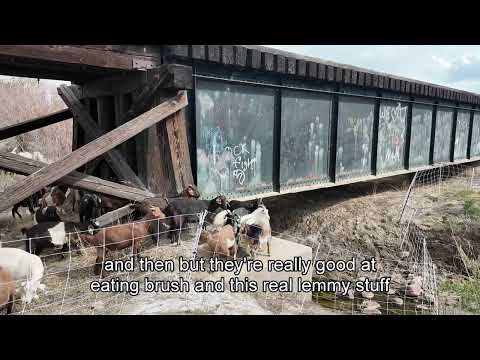
Goats used to clear noxious weeds along Killpecker Creek, owner says
Summary
At a site visit, LS5 Livestock owner Josh Scores described using 132 goats to remove perennial pepperweed and tamarisk from Killpecker Creek north of Springs Drive, saying grazing reduces brush that can block channels and increase flood risk; a paddock-level study is underway.
Rock Springs City Council representatives visited Killpecker Creek north of Springs Drive to inspect a goat-grazing project intended to reduce noxious woody vegetation and lower local flood risk. "My name is Josh Scores. I'm located in Eden, Wyoming. So, I'm the owner of the goats in LS5 Livestock," Scores said during the visit, describing the herd and the site conditions.
Scores pointed to widespread perennial pepperweed and tamarisk along the channel, both listed on the state noxious weed list, and said the woody plants can act as dams that obstruct stream flow and raise the chance of flooding. "As the water comes through ... it just acts as a dam and it stops everything," he said, noting visible past blockages in the creek.
He described the herd on site as 132 animals with additional goats at home expected to give birth soon. "The core of the herd is a Spanish goat," Scores said, adding they also run Kikos and some Nigerian goats kept more as pets. He said the animals strip limbs, consume undergrowth and have been observed girdling tamarisk trunks, which he said can kill the trees over time.
At a section grazed in early April, Scores showed council representatives a denuded area where pepperweed removal had allowed grasses to regrow. He said the intent is to favor grasses that help hold soil in place while removing brush that impedes water flow. "You don't want to take too much vegetation out because then you have erosion problems," he said.
Scores also described a monitoring effort: a technician is establishing paddock-level data points to quantify brush-cover reduction and support the grazing approach with measurements. He estimated the project covers about 7,200 linear feet from I‑80 toward the confluence (roughly a mile and a half) and warned that heavy spring rains could still produce flooding despite vegetation reduction.
Speakers emphasized permitting constraints for mechanical work in the channel. "From your Army Corps of Engineers standpoint, you have to have a permit to do anything down here and the time frame on those permits ... are years," one attendee said, framing goats as a more accessible option in steep or hard-to-reach channel areas.
The visit concluded with thanks from council representatives and the goat owner. No formal motion or vote was recorded on-site during the visit.