Get Full Government Meeting Transcripts, Videos, & Alerts Forever!
Get email alerts on the School Budget topic
No spam. Unsubscribe anytime.
Secaucus schools propose 7.2% levy increase to cover steep health-care costs in three-year recovery plan
Summary
The Secaucus School District presented a three-year budget plan that begins with a proposed 7.2% school tax-levy increase to offset a 30% spike in health-care premiums and stabilize district finances; administrators said the increase would equal roughly $170 per average household in year one.
Interim Superintendent Mark Toback said the Secaucus School District is recommending a three-year financial plan that starts with a proposed 7.2% increase in the school tax levy to address a sharp rise in employee health-care costs and decades-long funding gaps. "Secaucus schools are funded at the lowest level in Hudson County, right? At $17,746," Toback said, citing 2025 per-pupil figures.
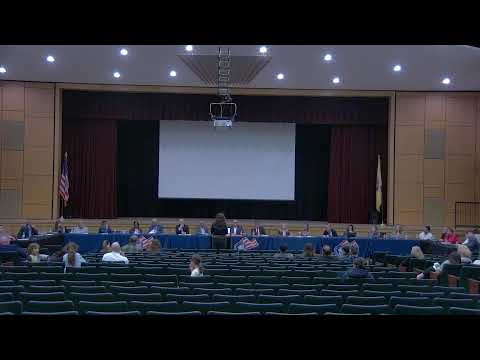
The plan, presented to the Board of Education and the mayor and council, relies on two primary elements: use of state-authorized levy waivers (including a health-care waiver) and limited budget cuts. Grace Yo, the districtbusiness administrator, said the district is seeing "a 30% increase in health-care premiums and a 32% increase in prescription costs," a change she tied to recent market shifts after federal actions in February 2026. Yo said the district has requested a two-year claims summary from providers and is working with brokers to find alternatives.
Assistant presenter Pat Cacucci outlined scenarios showing that a 7.2% levy in year one, combined with projected ~4% increases in years two and three under anticipated waivers, would generate roughly $6.6 million over three years. The administration said the first-year increase equates to about $170 per average household and would allow the district to avoid "deeper cuts" to academic programs, athletics and staffing.
Town Chief Finance Officer Patrick DeBlasio explained the townbudget context and said the municipal introduced budget would raise municipal taxes by about $245 a year on the average home; he described broad municipal cost pressures that also affect residents.
Board officials said the 7.2% proposal reflects the district dministrations effort to "maximize revenue in any way that we can" because waivers and an unused "bank cap" must be taken when available, the board said. Administration members emphasized that the budget documents would be posted to the district website and advertised in the Bergen Record ahead of the statutory public hearing and next week's formal budget vote.
Opponents and residents at the meeting urged transparency and detail about how the money would be spent. The board said program-specific staffing and personnel decisions would be discussed at an upcoming meeting and that no programs had been identified for elimination at this stage.
The district cited multiple data points in its presentation, including per-pupil funding history, inflation-adjusted comparisons and the state Taxpayers' Guide to Education Spending. Officials said the combination of the 2% levy cap, inflation and the end of pandemic-era one-time aid widened the long-term funding gap and that the proposed multi-year approach is intended to restore fiscal stability and protect classroom programs.