Get Full Government Meeting Transcripts, Videos, & Alerts Forever!
Get email alerts on the Economic Development topic
No spam. Unsubscribe anytime.
Council rejects Section 108 loan for Hanell development after residents raise language-access and alcohol concerns
Summary
After public opposition and questioning about outreach, liquor venues and financing, the City Council voted against the proposed Section 108 loan supporting the Hanell development. Staff had said the $24 million project would create roughly 170 jobs and that the city's $3.5 million would represent roughly 14% of total costs.
The Los Angeles City Council on Sept. 14 rejected a proposal to use Section 108 community development funds for the Hanell development, voting "seven Ayes, five Noes." The project, as presented by staff, would have used approximately $3.5 million in city-backed Section 108 financing as part of an estimated $24 million development and was characterized by staff as job-creation financing that could support about 170 jobs.
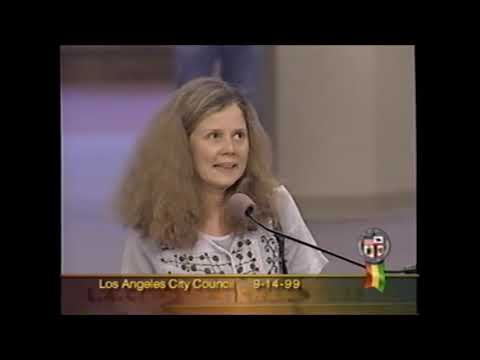
The vote followed a public hearing in which residents and neighborhood-watch representatives raised objections to how the project had been marketed and to its mix of uses. Robert Swanson of the Wilshire Center Community Watch told the council he opposed using “riot reconstruction” money to support what he described as a “members-only very expensive urban country club” and said the project appeared to promote alcohol sales and include “three liquor licenses but 11 locations in the building distributing full-line liquor sales.”
Developer representatives and others disputed parts of that characterization. Dr. Edward Han, identifying himself as a representative of Han Developing Corporations, said the developer had already invested “about $15 million on this project” and that it would produce roughly 175 local jobs. “We do invest already $15 million on this project,” he said.
City staff from the Community Development Department told the council they had reviewed the application and an independent feasibility study and concluded the project met the Section 108 national objective of job creation. Jasper Williams and Ernie Tidwell said the underwriting shows the city’s gap financing—about $3.5 million—would represent roughly 14% of total costs and that the private lender’s proposed permanent financing was $10 million. Williams also told the council that the developer intended a membership model with a range of membership options and that staff had not received precise low-end membership-rate quotes.
Councilmembers questioned both the outreach done to prospective tenants and the overall mix of uses. Several members noted public testimony that leasing outreach had been conducted in Korean media and asked whether that process complied with city and federal accessibility requirements. Council discussion also flagged concerns about whether the project’s retail and food court components might result in multiple points of alcohol sales and whether the project was bankable given comments that lender collateral and borrower credit were weak.
After hearing staff defend the underwriting and note that Section 108 rules permit gap financing under the stated job-creation objective, the council voted and the measure failed. The council did not adopt the Section 108 financing authorization at this meeting.
What’s next: Because the council voted against the financing as presented, the city will not proceed with the recommended Section 108 loan for this project based on the action taken Sept. 14. The developer and staff may return with revised proposals or additional materials; no subsequent schedule was announced at the meeting.