Get Full Government Meeting Transcripts, Videos, & Alerts Forever!
Get email alerts on the Dementia Care Community topic
No spam. Unsubscribe anytime.
Moore County program coordinator urges neighbors to ‘pivot’ and support people with dementia
Summary
At a Moore County Senior Enrichment Center presentation, Lynn Drinkwater described the Engaged Brains Project, urged neighbors to commit to short visits and offered conversation-starter cards and local respite resources to support people with dementia.
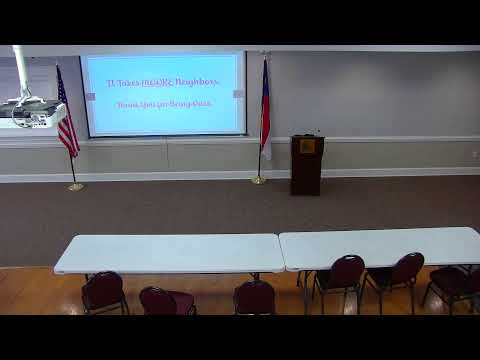
Lynn Drinkwater, program coordinator at the Moore County Senior Enrichment Center, told a packed session that small, regular acts of neighborly support can slow isolation and help people living with dementia. Drinkwater used her mother’s experience with dementia to frame the presentation and introduced the Engaged Brains Project, a grant-funded program training local "champions" to run outreach and impact projects around memory care.
The talk outlined concrete steps: trained volunteers will run projects such as fidget mats for secured memory units, caregiver bingo to reduce stigma, CNA training for in‑home aides, and tailored music playlists for people with memory change. Drinkwater asked attendees to sign a "pinky promise" committing to reach out to a caregiver they know and gave out conversation‑starter cards designed to make visits easier.
Why it matters: Drinkwater said isolation accelerates cognitive decline and that community socialization is a practical, low‑cost complement to clinical care. She described the Engaged Brains Project as a two‑year grant program (with the possibility of a third year) that aims to train roughly 60 champions across Moore County who will each carry out local impact projects and ripple the approach through neighbors and agencies.
Drinkwater combined personal anecdotes with program detail. She described daily phone calls with her mother and used the image of a "pink princess phone" to show how familiar objects anchor identity: "Do you see the pink princess phone?" she asked the audience when calming her mother during a moment of confusion. She also quoted curriculum statistics used in training to underline the scale of social isolation among older adults.
An attendee reinforced Drinkwater’s point: "Socialization is the key," the participant said during a brief question-and-answer exchange.
The presentation included resource information: Alvida Pson, the center’s family caregiver adviser, maintains a resource guide and helps families arrange respite through licensed, bonded home‑care agencies; Drinkwater encouraged caregivers to contact Pson for individualized planning. Drinkwater also announced a town hall with Dr. Karen Sullivan and a public screening of the documentary Alive Inside at the Sunrise Theater (September 4, 3:00 p.m.) and said a local Girl Scout volunteer is compiling personalized playlists for program participants.
Drinkwater asked people to take two small, concrete steps: (1) pick dates on their calendar to visit or phone a neighbor who is a caregiver, and (2) sign the pinky‑promise canvas and take conversation‑starter cards. She said those small visits provide respite for caregivers and preserve relationships for people living with brain change.
The session closed with thanks and an invitation to visit the Engaged Brains table for more information; no formal vote or policy action was taken.