Get Full Government Meeting Transcripts, Videos, & Alerts Forever!
Get email alerts on the Community Impacts topic
No spam. Unsubscribe anytime.
Senators press EPA on Solar for All, PFAS liability and a presidential exemption for a lead-emitting smelter
Summary
Lawmakers questioned Administrator Zeldin about the rescinded $7 billion Solar for All program, EPA's use of CERCLA for PFAS cleanup, and a presidential section 112 exemption granted to a smelter near an elementary school that senators say emits lead and arsenic.
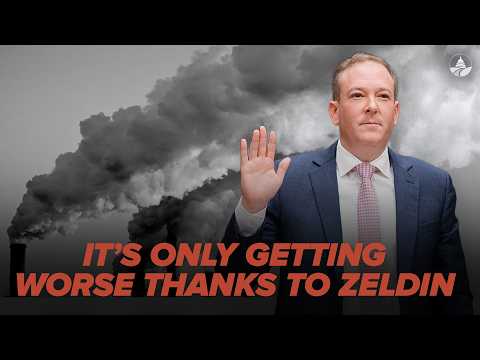
Senators used the Environment and Public Works hearing on May 13 to press EPA Administrator Lee Zeldin on several specific program decisions and community impacts, including the status of Solar for All funding, PFAS cleanup authority, and a presidential exemption for a smelter alleged to be emitting lead and arsenic near a school in Miami, Arizona.
Senator Bernie Sanders asked Zeldin to work with him to restore the Solar for All program, a $7 billion Inflation Reduction Act initiative intended to expand rooftop solar for low-income households. Zeldin responded that Congress rescinded the account in the Working Families Tax Cut and that the agency lacks oversight funds for the program unless Congress reauthorizes it. He also said EPA staff found implementation inefficiencies in the original design and invited discussion on ways to improve administration if funding were restored.
On PFAS, committee members raised concerns about passive receivers such as small water companies and agriculture that could be held liable under CERCLA. Zeldin said EPA believes "the polluter should pay," that CERCLA and RCRA were not written with PFAS specifically in mind, and that the agency has not secured a liability settlement to report. He welcomed congressional solutions addressing passive-receiver liability and committed to working with states to deploy safe-drinking-water state revolving funds.
Senator Mark Kelly pressed Zeldin about a presidential section 112 exemption granted to a smelter in Miami, Arizona that Kelly said emits 12 tons of lead and 3 tons of arsenic annually and sits near an elementary school. Kelly said the facility had requested and received a fast-tracked exemption via an EPA webpage and staff coordination; he asked whether the president or the agency should revisit the decision. Zeldin said EPA's role is to receive and transmit exemption requests to the White House and agreed to provide requested information and follow up with the senator's office.
The hearing included several follow-up requests: senators asked EPA for documentation of individualized grant reviews tied to canceled IRA-funded programs, status updates on WIFIA loans and the RMP public-information webpage, and further data on health-impact valuations for rule analyses. Zeldin agreed to provide information and to continue consultations with members.
Ending note: The topics raised combine national program arguments (Solar for All, PFAS authority) with specific community concerns that the committee asked EPA to address within the record.