Get Full Government Meeting Transcripts, Videos, & Alerts Forever!
Get email alerts on the Climate Policy topic
No spam. Unsubscribe anytime.
Whitehouse challenges EPA on cost math and health valuation as agency rolls back standards
Summary
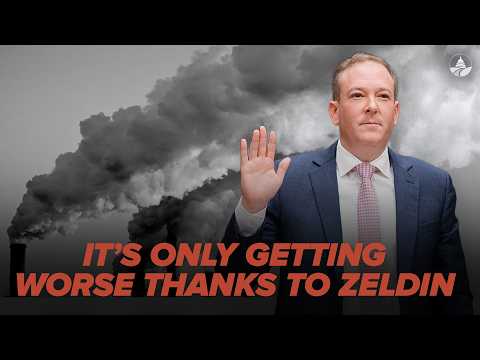
Ranking Member Sheldon Whitehouse accused the EPA of elevating fossil-fuel interests and understating health costs, pressing Administrator Zeldin on rollbacks to the endangerment finding, mercury rule repeal and vehicle standards during the Senate EPW hearing.
Ranking Member Sheldon Whitehouse told the Senate Environment and Public Works Committee on May 13 that recent EPA rollbacks amount to an "attack" on science and will raise costs for consumers while benefitting fossil-fuel interests.
"Climate change is moving from the science department to the economics department," Whitehouse said, arguing that insurance markets and property values already show cascading economic harms from unchecked climate risk. He repeatedly criticized the agency's regulatory impact analyses, saying they omit or undervalue health benefits and that some rollbacks transfer costs to consumers and to public health.
Whitehouse cited the agency's own analysis when arguing the vehicle standards rollback could increase net costs to consumers, and he challenged Zeldin on the agency's decision not to "monetize" health benefits in some analyses. "American lives have become literally worthless, a value of zero in the eyes of your EPA," Whitehouse said, framing the point as a public-health concern.
Administrator Zeldin disputed Whitehouse's characterizations and defended EPA's approach to cost-benefit analysis, saying contemporary facts and updated assumptions justify the agency's decisions. On the question of a 9-cent offshore wind price cited by senators, Zeldin repeatedly pushed back on the simple comparison to an 18-cent average grid price, saying that firms and grid operators must account for firming and other system costs.
The exchange highlighted the political and technical divide over how agencies measure the costs and benefits of environmental protection, and it underscored continuing committee pressure on EPA to provide transparent supporting data and analysis.
Ending note: Ranking Member Whitehouse and other Democrats asked for more detailed health-impact accounting; Zeldin said the agency would continue to engage on the analytic approach.