Get Full Government Meeting Transcripts, Videos, & Alerts Forever!
Get email alerts on the Military Buildup Grants Housing topic
No spam. Unsubscribe anytime.
CDLO outlines grants and warns housing, health systems strained as DoD spending tops $10 billion in visible projects
Summary
The Community Defense Liaison Office told the Guam Legislature that DoD housing plans, a $10.5 billion visible MilCon program and pending infrastructure projects are increasing pressure on local housing, medical capacity and utilities; CDLO described active grants and new assessments to prepare villages, hospitals and logistics.
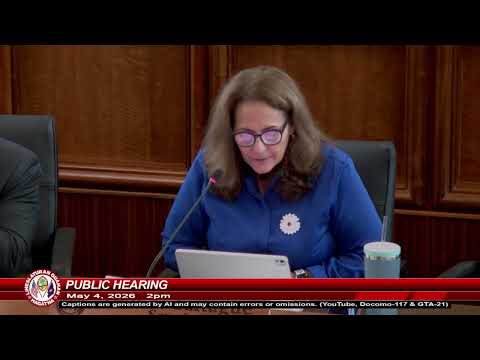
Vera Tabashna, executive director of the Community Defense Liaison Office, told the Senate committee on May 4 that CDLO coordinates Guam agencies and federal partners to identify buildup impacts and secure federal investments to protect local health care, housing and infrastructure. "The community defense liaison office continues to serve as the government of Guam's coordinating link on defense related matters that affect our island community," she said.
Tabashna summarized CDLO's current work across five areas—grant portfolio management, housing, infrastructure, health-care and preparedness, and federal coordination tied to the Economic Adjustment Committee process. She said CDLO currently manages a logistics-and-operations grant and a professional advisory-services grant supporting NEPA and infrastructure assessments; she described three new awards in pipeline: a village-infrastructure needs assessment, a medical-capacity services grant covering clinics and hospitals, and an infrastructure risk assessment examining fuel logistics, broadband, cyber and transportation networks.
On housing, Tabashna relayed figures presented to CDLO by Joint Region Marianas and related DoD briefings: a Phase 1 housing request covers roughly 917 family units plus about 400 unaccompanied‑service‑member units, while Phase 2 remains under review. She described acquisition options discussed by DoD—"a lease, a lease-to-purchase or other transaction structure as deemed appropriate by and acceptable by the Department of the Navy." Committee members pressed for clarification about whether base construction would add or only replace housing; Tabashna said some authorized projects are replacement rather than net new units.
Tabashna also cited defense construction and MilCon figures reported to CDLO and agency partners: millions in planned awards for FY26 and a proposed FY27 package, totaling a visible program near $10.5 billion across active execution and planned budgets. She warned that DoD reporting shows demand for inpatient and outpatient medical services can outpace current capacity—the Navy hospital inpatient capacity cited to the committee was described at roughly 39 beds—and said CDLO is coordinating with NAPAC and local agencies on a Guam DoD master plan and gap analysis.
CDLO emphasized that the Economic Adjustment Committee convening (postponed after Typhoon Slaku) is the venue to present agency priority projects—hospital capacity, port facilities, Guam Power, Guam Water and DPW roads—and to seek federal investment. Tabashna said some studies (for example, a directed feasibility study referenced in the NDAA for a shipyard) are pending and that CDLO will continue packaging agency requests for federal consideration.
The committee followed with detailed questions about CDLO slides, grant timelines and the status of Phase 2 housing; Tabashna asked to supplement the record with updated medical‑capacity numbers if the committee wanted more current figures.
The committee recessed the briefing for a later public‑comment session and invited written testimony and follow-up data from CDLO.