Get Full Government Meeting Transcripts, Videos, & Alerts Forever!
Get email alerts on the Grading Policy topic
No spam. Unsubscribe anytime.
Talbot County board debates overhaul of grading practice; committee recommends shifting weight to formatives and limiting summative retakes
Summary
Board members spent the bulk of the meeting in a heated first‑reader debate over proposed changes to AR/Policy 9.25 that would raise the weight of formative assessments, adopt a four‑point conversion scale and shift retesting to formatives rather than summatives; trustees signaled both support and concern and will revisit the proposal in second reader next month.
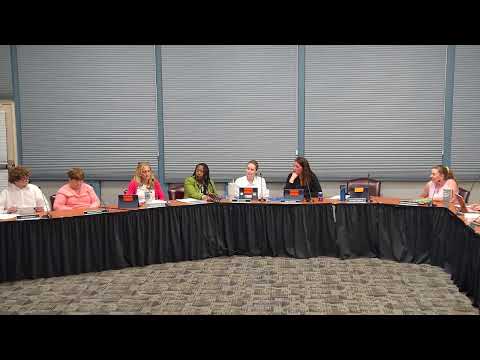
The Talbot County Board of Education spent more than an hour on April 15 reviewing proposed revisions to AR/Policy 9.25, a set of administrative regulations that would change how the district reports student progress and how teachers weight and handle assessments.
The district’s policy team presented a hybrid grading model that converts grades to a four‑point scale and increases the weight of formative assessments from 30% to 40%, leaving summatives at 60%. The committee also recommended that reteaching and reassessment be available primarily for formative work rather than for summatives, and that teachers add plus/minus detail to interim grades while the final year grade would remain a letter.
“That was one of the most unanimous agreements...primarily from teachers,” Mrs. Warner said of the committee’s recommendation to emphasize formatives and to allow retakes on them rather than on summatives. She told the board the change aligns grading practice with instruction so teachers check progress along the way and reteach in smaller chunks before a high‑stakes summative.
Why it matters: The proposed changes are meant to encourage sustained engagement with learning and to align classroom practice with what the district’s committee described as the science of instruction, but trustees said the shift could produce unintended effects on student GPA, class rank and college readiness if not phased or communicated carefully.
Opponents on the board warned that removing or sharply restricting summative retakes could penalize students who score well on formative work but underperform on a single major assessment. “One of my children had all A’s on formatives and then a B on a summative and because the summative was weighted so heavily, the quarter was a B,” one board member said, arguing that some retake opportunity on summatives preserves fairness.
Other issues raised during the discussion included: - how missing and incomplete work will be defined and handled (the AR proposes zeros for missing and a 0.25 value for incomplete entries but allows retake opportunities for formatives prior to the related summative); - how PowerSchool will display grades and whether parents will still be able to see percentages (staff said family-facing one‑pagers and a conversion table will be provided online); - whether to phase the roll‑out (several trustees suggested a staggered implementation beginning with K–2 or incoming cohorts to avoid sudden impacts on juniors and seniors); - whether the final year grade should preserve plus/minus distinctions for fairness to high achievers.
School leaders and teachers who participated in committee work told the board that the change addresses long‑standing grading inconsistencies across classrooms and that shifting retake opportunities to formatives better supports instruction. But the board did not vote on the AR; members asked for additional clarification and said the proposal will return as a second reader next month.
What’s next: Staff will return with clarifications on timelines for due dates, precise definitions of “missing” and “incomplete,” details on how PowerSchool will present grades to families, and implementation options to minimize disruption for upper‑class students.