Get Full Government Meeting Transcripts, Videos, & Alerts Forever!
Get email alerts on the Parking Traffic Committee topic
No spam. Unsubscribe anytime.
City manager proposes new Parking and Traffic Safety Committee to replace Complete Streets
Summary
At a May 4 workshop the city manager proposed replacing the joint Complete Streets committee with a four-member Parking and Traffic Safety committee to handle citizen complaints and advise on parking, speed, pedestrian and bicycle safety; councilors raised questions about bike infrastructure, enforcement and committee follow-through.
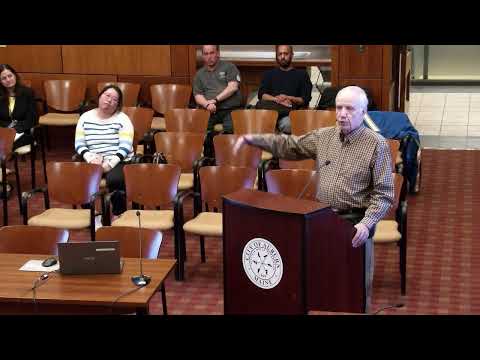
At a May 4 Auburn City Council workshop, City Manager Bill Croll proposed replacing the long-running Complete Streets committee with a new Parking and Traffic Safety committee intended to give residents a clearer public-facing forum to raise parking, speed and pedestrian-safety concerns.
Croll said staff has identified a steady stream of citizen inquiries on parking and speeding and that recent state changes to parking regulation make a focused committee timely. “We get a lot of inquiries from citizens that are concerned about these issues,” he said, describing a four-member panel with staggered terms, two officer positions and an application process run through the city’s appointment committee.
The manager said the committee would develop its own rules for public intake — including a form for citizens to submit complaints or request time to speak — and would coordinate with engineering, police and fire on topics such as school-zone safety, crosswalk placement, traffic-calming measures and off-street municipal parking options like pay-and-display or day permits. He also suggested the committee would be a place to request Vision Zero updates and help plan public education campaigns for drivers and instructors.
Dan, the city engineer who described the current Complete Streets review process, told the council the existing committee typically reviews design plans during the CIP design season and provides input to engineering on striping, shoulders and sidewalks. He noted past disagreements between engineering and Complete Streets that hinged on cost and constructibility, saying the council has sometimes sided with engineering when projects were deemed too expensive.
Councilors welcomed the idea but pressed staff on specifics. One councilor said City Hall lacks bike racks and urged that bike infrastructure be part of the committee’s scope. Councilor Gary asked whether the committee would incorporate recent state law changes that reduce parking minimums for new developments; Croll said staff expects those statutory changes to be a near-term priority for the committee.
Others warned the body could become inactive — a “sleeper” that reviews items once and then rarely follows up. Croll responded that the committee’s workload would be driven by incoming public complaints and that the group would maintain a public portal for issues and a requirement to report recommendations to the council.
The manager said staff studied other municipalities, citing Portsmouth, New Hampshire as a model of a productive local traffic and parking committee, and that the new group could also review off-street municipal parking strategies and wayfinding for pedestrians and cyclists. Dan added that the joint Complete Streets committee currently meets monthly and that regional planning coordination would continue through ATRC and AVCOG channels.
The council directed staff to place an ordinance establishing the new committee on the regular meeting agenda two weeks later for formal consideration.
What’s next: The council scheduled the ordinance for the regular meeting agenda two weeks after the workshop for first reading and public review.