Get Full Government Meeting Transcripts, Videos, & Alerts Forever!
Get email alerts on the Housing topic
No spam. Unsubscribe anytime.
Joseph Toledo presents Fairfield County housing study, warns of 15% population decline and recommends zoning changes
Summary
A 2024 housing study presented to Fairfield County Council shows a nearly 15% population decline (2010–2020), recommends diversifying housing types, adjusting RD1 lot-size rules and forming a housing committee; council was asked to consider adopting the study into the strategic plan.
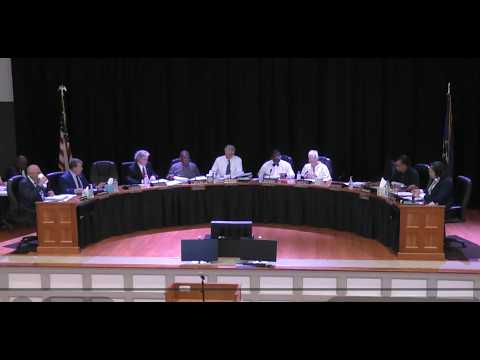
Joseph Toledo, presenter of the Fairfield County housing study, told the County Council on May 11 that the county has experienced sustained population decline and a mismatch between housing supply and community needs.
“Since 2010, the county lost nearly 15% of our population,” Toledo said, and added that the county’s median age has risen to about 45. He said those trends, combined with an outbound commuting workforce of roughly 3,300 residents, reduce daytime demand for local businesses and shape what types of housing are viable.
The study — completed in 2024 and prepared by MRB Group — found Fairfield’s housing inventory is dominated by single-family detached homes, much of the stock is older or in poor condition, and vacancy and affordability problems persist. Toledo said nearly half of renter households are cost-burdened and that median renter income is about $20,000.
To address those gaps, the study recommends diversifying housing choices to include townhomes, duplexes and other middle-density options often called the “missing middle.” It also recommends revising county zoning rules that the presenter said limit denser development; much of the county is zoned RD1 (rural residential), which currently requires minimum lot sizes of 1 acre, a constraint Toledo said can force sprawl and inhibit smaller-lot development.
On incentives, Toledo suggested programs to support rehabilitation of older housing — including small grant pilots and tax-relief mechanisms for historic-property rehabilitations (the presentation referenced a “Bailey” bill as an example of tax-protection incentives) — and called for establishing a housing committee to translate the study’s recommendations into policy and identify sites where developers could more quickly build when infrastructure exists.
Council members pressed Toledo in a question-and-answer session about who would drive rehabilitation and whether the plan anticipates large projects. Council member Bale asked whether rehabilitation would rely on private owners or public assistance; Toledo said rehabilitation would largely be market-driven but that targeted county grant programs could lower barriers and spur investment. When asked about the potential restart of the VC Summer project, Toledo said the study could be updated to account for large employment centers but noted that infrastructure—particularly access to public water and fire protection—more than sewer often determines whether higher-density developments are feasible.
Toledo recommended the council consider formally adopting the housing study as a component of the county’s strategic plan and track implementation through a dashboard that would measure progress over the next one to four years. No formal adoption vote occurred at the May 11 meeting; Toledo asked the council to consider the study for a future adoption vote.
The presentation and discussion are intended to inform upcoming policy choices on zoning, incentives, and infrastructure investment that would shape where and how new housing can be developed in Fairfield County.