Residents urge county caution on so-called “AI factories,” citing water and power concerns
Summary
Speakers at the public-comment period urged White County officials to reject large AI/data-center-style projects, warning they could consume large amounts of water and electricity, harm tourism and yield few local jobs; commissioners said no data-center deals are currently on the table and emphasized public input.
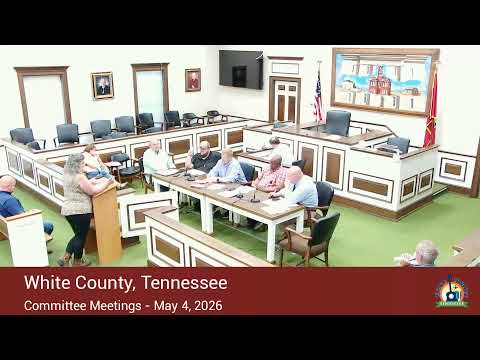
Several residents used the public-comment period at a White County meeting to press elected officials to avoid allowing large specialized AI facilities or data centers that, they said, could strain local water and electrical systems and harm tourism.
Abigail Morris, a White County resident and Tennessee Tech student, delivered an extended prepared statement asserting that AI "factories" differ from traditional data centers and could be optimized to ingest, train and commercialize data. Citing census and agriculture figures, Morris warned a large facility could require heavy power and water resources, generate noise from cooling and backup generators and provide only modest long-term employment (she cited a range of 20–150 permanent jobs depending on facility scale).
Morris and other speakers raised hypothetical figures about electricity-price impacts and local water-demand scenarios, and urged commissioners to consider the county’s farmland, parks and tourism when weighing proposals. Commissioners responded that the county has not discussed data centers and that the county’s outreach has focused on industrial/manufacturing prospects rather than large data-mining facilities. Officials encouraged residents to share sources and participate in the public process for any future proposals.
No formal agreements, permits or approvals for data centers were described in the meeting record; staff reiterated that community engagement would precede any future deals.
AI generated
The text on this page is AI generated. Summaries, highlights, analysis, and video transcripts are all produced from the original source material.
AI can make mistakes, so if you spot one, and we will fix it for everyone.
Note: the source content is unaltered by us. Any content source we link to, be it a video, an audio recording, or a document, is presented exactly as its publisher released it. That publisher is usually a government body, sometimes an individual official or another organisation.