Get Full Government Meeting Transcripts, Videos, & Alerts Forever!
Get email alerts on the Family Law topic
No spam. Unsubscribe anytime.
Appellant Says Probate Judge 'Prejudged' 40-Year Marriage Case; Appeals Court Questions Process
Summary
In 24P1270, counsel for the appellant argued the probate court repeatedly signaled an outcome—citing on-the-record remarks about the marriage length and a post-trial appointment of a special master—amounting to a denial of fundamental due process in the trial court’s property division.
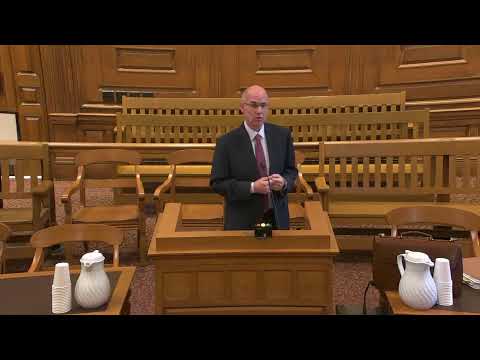
The Appeals Court in Boston heard argument on May 5, 2026 in 24P1270, Casemir Goreki v. Jacqueline Gerki, where appellate counsel Alfred Fese III argued that the probate judge prejudged the case and denied fundamental due process by announcing results before evidence was closed and by including an appointment of a special master in the judgment rather than through an on-the-record appointment during trial.
Fese told the panel that the judgment's outcome "was derived before the evidence was closed" and said the trial record contains a litany of remarks—repeatedly characterizing the case as a "40-year marriage"—that, in his view, show the judge had decided the result before hearing the full evidence. Counsel argued the court's repeated statements (e.g., "It's a 40-year marriage. What do you want me to do?") and the timing of the special-master appointment undermined the required section 34 factor analysis and meant mandatory factors such as conduct and contribution were not properly weighed.
The appellant pressed discrepancies between trial testimony and the judgment (including treatment of a HELOC and credit-card debts and how settlement proceeds were applied) and said the record did not reflect the careful factor-by-factor analysis the statute requires. The panel asked procedural questions about whether the appointment was made on the day of trial or only later in the written judgment and whether the trial transcript reflected the judge’s on-the-record comments.
Counsel for the respondent and the panel’s questions explored whether the judge could reasonably emphasize the length of the marriage while still considering other statutory factors. The appellant rested after argument and the matter was submitted for decision; no ruling was made from the bench.