Get Full Government Meeting Transcripts, Videos, & Alerts Forever!
Get email alerts on the Doe Loan Package topic
No spam. Unsubscribe anytime.
DOE says $26 billion loan package will revive Georgia plant site, add generation in Southeast
Summary
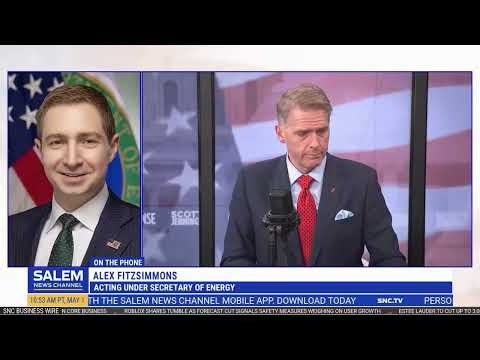
Acting Under Secretary Alex Fitzsimons told the Scott Henning Show that DOE closed a $26 billion loan package backing a project in Heard County, Georgia, which he said will add more than 16 gigawatts of generation across Georgia and Alabama and lower ratepayer costs.
Acting Under Secretary Alex Fitzsimons said the Department of Energy closed a $26 billion loan package that will back a major power project in Heard County, Georgia, converting a shuttered coal-plant site into new generation and storage.
"It is part of a $26 billion loan package that DOE's Office of Energy Dominance Financing closed with Georgia Power and Alabama Power," Fitzsimons said on the Scott Henning Show, adding that the package "is the single largest loan package in the history of the federal government outside the financial crisis." He said the project will include a 1,500-megawatt natural gas plant and battery energy storage at the Heard County site.
Fitzsimons said the broader package will deliver "more than 16 gigawatts of new and incremental generation to Georgia and Alabama," listing what he described as a mix of 6 gigawatts of nuclear, 5.5 gigawatts of natural gas, 3.5 gigawatts of battery storage, 1 gigawatt of hydropower and roughly 1,300 miles of transmission. "It will save ratepayers in Georgia and Alabama $7 billion in savings over the course of the loan," he said.
When host Scott Henning asked whether the loan will be repaid with interest, Fitzsimons said yes, and described the department's lending as providing a low cost of capital that, he said, statutory rules require be passed through to ratepayers in the form of lower energy costs. "So, this is a great return for the taxpayer," he said, arguing that large utilities such as Georgia Power and Alabama Power present low credit risk.
Fitzsimons also said DOE has a pipeline of similarly structured projects and that other utilities are seeking comparable deals. "DOE is now the largest energy lender in the United States," he said, and listed planned investments in nuclear, natural gas, geothermal, hydropower, transmission infrastructure and battery storage.
The Department of Energy official framed the package as part of the administration's broader "energy dominance" agenda and as supporting technology competitiveness. The interview did not include independent documentation of the figures Fitzsimons cited, and he attributed cost, generation and savings estimates to DOE's financing statement.
No vote or regulatory action was taken during the interview; Fitzsimons described a financial closing and a project groundbreaking in Heard County. The department and the named utilities would be the next points of contact for detailed financing terms and the project schedule.