Get email alerts on the Housing Programs topic
No spam. Unsubscribe anytime.
Neighborhood Development details housing programs, application dates and ARPA spending plan
Summary
Neighborhood Development Senior Director Jamie Roberts told the council the city will open applications April 7 for critical roof repairs, explained HUD-funded CDBG/HOME/ESG programs and outlined ARPA-backed subdivision and multifamily projects with timelines and outstanding approvals.
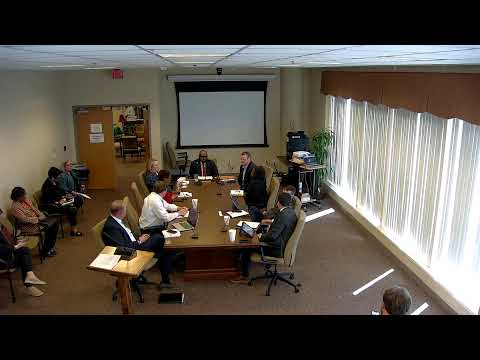
Jamie Roberts, Neighborhood Development Senior Director, told the Mobile City Council that the city’s community housing programs are restarting key application windows and moving multiple ARPA- and HUD-funded projects toward completion.
Roberts outlined the city’s federal grant portfolio — Community Development Block Grant (CDBG), HOME Investment Partnerships (HOME) and Emergency Solutions Grant (ESG) — and said the neighborhood development office is managing those funds to avoid regulatory pitfalls and to prevent returning money to federal agencies. “The main primary missions … includes administering the grant funds so that it’s not a liability to the city,” Roberts said.
The director announced an application opening for the critical repair roofing program: “We’ll be taking applications on April 7th starting at 8:00 a.m. at 110 North Lafayette, the Von Mancy Center,” Roberts said, and added that an average roof replacement runs about $10,000. Under typical HUD funding the program replaces roughly 50–60 roofs per year; in a high-ARPA year the city completed about 151 roofs.
Roberts described the HOME program, which provides funding to developers to build homes sold at appraised value to buyers holding Housing Authority vouchers. Roberts said roughly 10 HOME closings have occurred to date; vouchers and mortgage terms vary by buyer category (for disabled or senior buyers vouchers may remain for the life of the mortgage). “The voucher actually pays a large portion of their mortgage,” Roberts said.
On supply and quality, Roberts cited 2010 census data showing a 15.4% surplus in counted housing units and said many surplus units are poor-quality or blighted, which has driven municipal enforcement and selective demolition. Roberts said a recent residential survey identified about 800 blighted units, approximately half of which appeared occupied.
Roberts also reviewed larger projects funded in part with American Rescue Plan Act (ARPA) dollars: Woodcock Place, CJ Small Heights and Arlington subdivisions, and several multifamily projects (including Maryville Place and Live Oak Trace). She said the city provided land with covenant restrictions designed to preserve owner-occupancy (not rental), noted a Woodcock sales cap of about $195,000, and gave projected timelines: smaller subdivisions and single-family scattered-site projects may finish by year-end, while larger tax-credit-backed projects typically take about 18 months after closing (Roberts said some closings are expected around July).
Two larger developments remain contingent on final approvals from the Alabama Housing Finance Authority and ADECA, Roberts said. She also called out Spencer Crossing as the city’s first workforce development tax-credit application, noting workforce projects differ from affordable projects because they do not include vouchers but allow higher income limits.
On funding and budgeting, Roberts said HUD’s final numbers were pending but the city was using last year’s allocations as a baseline; she referenced a proposed CDBG allocation figure in staff materials and said the administrative cap is 20 percent. Roberts noted the city recently completed its last Section 108 payment, freeing funds previously pledged to repay that debt.
Roberts described program-level supports: a $1 million float loan for housing rehab, a microenterprise loan program for businesses with five or fewer employees (loans converted to grants after required training), and a 15 percent CDBG subrecipient set-aside for nonprofits; she named the Mobile Housing Authority and United Way of Southwest Alabama as recent subrecipient partners.
On homelessness funding, Roberts said the Continuum of Care typically manages most regional resources (about $2–4 million) while the city receives roughly $200,000 in ESG funds. She explained a cap on shelter services (up to 60 percent of ESG budgets) and said Legal Services often receives funding for legal representation and related services when no other provider exists.
Roberts summarized ARPA spending status: the city received roughly $58 million and has about $15 million remaining in commitments, mostly programmed to Providence, demolition and housing-complex work, and subdivision construction. She said the city is reporting to the Treasury on a required quarterly basis and anticipates using the remaining funds within the statutory schedule.
Roberts closed by introducing her team (Grants Administrator Chris McGarity; Small Business Development Manager Ashleigh McKee, among others) and invited council members to contact staff for program details.
The meeting adjourned without formal motions or votes on the items discussed.
AI generated
The text on this page is AI generated. Summaries, highlights, analysis, and video transcripts are all produced from the original source material.
AI can make mistakes, so if you spot one, and we will fix it for everyone.
Note: the source content is unaltered by us. Any content source we link to, be it a video, an audio recording, or a document, is presented exactly as its publisher released it. That publisher is usually a government body, sometimes an individual official or another organisation.