Get Full Government Meeting Transcripts, Videos, & Alerts Forever!
Get email alerts on the Infrastructure Water topic
No spam. Unsubscribe anytime.
Stokes County updates Danbury, Meta and regional ARPA‑funded water projects
Summary
County staff said ARPA funds are supporting three major water projects: Danbury main replacement, the Meta backup project, and a broader Stokes County Water Sewer Authority build‑out; tanks, wells and mains are underway with completion targeted in 2026.
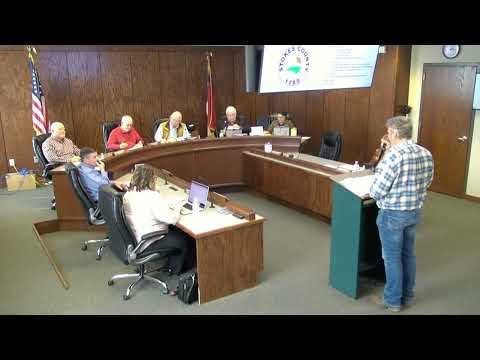
Stokes County public‑works staff updated commissioners Nov. 24 on multiple ARPA‑funded water projects intended to improve redundancy and expand access.
Officials said the Danbury main replacement is replacing aging mains with C900 8‑inch pipe through town and that all bores except one are complete; the Meta project (also $5 million ARPA funding) is at roughly 75% main‑line completion but hit rock in places, delaying progress. Both projects will provide backup supply and hookups for adjacent homeowners when finished.
A larger $18 million ARPA project tied to the Stokes County Water Sewer Authority will extend water from the German system through Walnut Cove up to Meta and includes cleared tank sites and the purchase/manufacture of storage tanks with installation planned for spring (April–May 2026). Presenters said they had sampled a newly drilled well that sustained approximately 195 gallons per minute during a 24‑hour run and that it tested clean.
Commissioners raised questions about potential state policy changes favoring regional systems for future funding; staff said current ARPA funds must be spent by December 2026 and that payment process with the state has been working smoothly for approved pay requests.
Next steps: Continue pipeline and tank installation, manage contractor schedules and provide commissioners a future briefing on the water‑sewer authority’s longer‑term planning and implications if state grant rules shift toward regionalization.