Get Full Government Meeting Transcripts, Videos, & Alerts Forever!
Get email alerts on the Board Protest Code Of Conduct topic
No spam. Unsubscribe anytime.
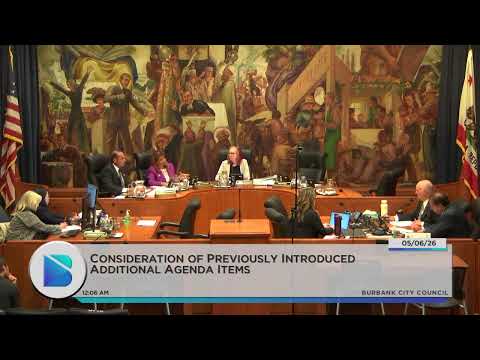
After protest at Realtors' hall, council votes to seek legal guidance and schedule code‑of‑conduct review
Summary
A protest over an April 28 rental at the Burbank Association of Realtors split speakers at the May 5 council meeting. Complaints of blocked access and alleged assaults prompted the BAOR to defend its rental policy; council asked the city attorney to seek outside guidance on campaign committee and fundraising questions and scheduled a June 2 follow‑up on potential code‑of‑conduct issues.
What happened: The City Council heard a string of public complaints on May 5 after an April 28 event at the Burbank Association of Realtors (BAOR) office drew protesters. Some attendees and BAOR staff said tensions escalated and access was impaired; one resident told the council he was assaulted while attempting to record what he said were incendiary comments by a planning commissioner at the gathering.
BAOR response: Cameron Hunter, president of the Burbank Association of Realtors, told the council BAOR makes its meeting space available under a consistent non‑discriminatory rental policy and does not endorse the views of renters. He said BAOR staff and members had been mischaracterized in public communications and that the episode had produced threats and safety concerns for members and staff.
Accusations and council action: Several speakers and later written complaints alleged that some protest organizers and participants allowed or failed to stop physical confrontations and that communications before the event had raised safety concerns. David Donahghue told council he was assaulted outside the event and said he had delivered video evidence to the city attorney and police.
Separately, Vice Mayor Mullins raised concerns that a council member participated in or communicated about a private fundraising committee tied to a possible ballot measure, and asked the city attorney to seek guidance. The City Attorney explained that campaign‑finance questions can fall under the jurisdiction of the state Fair Political Practices Commission (FPPC) or the Attorney General. Council voted (unanimous among present members) to direct the City Attorney to seek FPPC/AG guidance about whether funds raised by a named committee were properly separated from other political accounts, and to return with findings.
Civic governance review: Council also voted to add a follow‑up item to the June 2 agenda for a detailed discussion of whether any city code‑of‑conduct provisions were violated—specifically rules about the use of public office, use of public resources and interference with administrative functions—and whether a formal reprimand (censure) is appropriate. The City Attorney noted that a censure is a public reprimand that can be placed on the record; removal from office is only possible through a voter process.
What council said: Council members emphasized two parallel needs: protecting free speech and protest rights, and ensuring city officials do not use official authority or city resources to influence private events or to take actions outside the city’s policy processes. Several members urged a full, public examination of documents (text messages and complaint letters were referenced in council discussion) and an opportunity for any council member whose conduct is being questioned to respond in council chamber.
What’s next: The City Attorney will seek outside guidance and return to council; council scheduled a June 2 agenda item for a code‑of‑conduct review and indicated draft language for a possible censure or other remedies should be provided so the council can discuss and, if warranted, vote in public.