Get Full Government Meeting Transcripts, Videos, & Alerts Forever!
Get email alerts on the Animal Control Contract topic
No spam. Unsubscribe anytime.
Emeryville approves animal‑control contract with Berkeley after officials cite limited regional options and rising costs
Summary
The Emeryville City Council voted unanimously May 5 to authorize a multi‑year animal‑control agreement with the City of Berkeley after staff described limited regional providers, rising shelter and veterinary costs, and an average of roughly 115 animal calls a year for Emeryville.
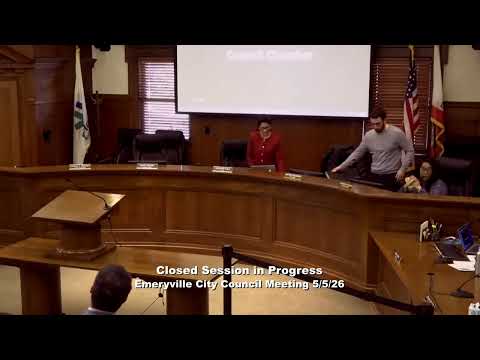
The Emeryville City Council on May 5 authorized the city manager to execute an agreement with the City of Berkeley to provide animal‑control services after a staff presentation and detailed questions from council members.
Police Chief Jennings — who answered council members’ questions during the consent‑item discussion — said Emeryville averages more than 115 animal incidents annually, including about 55 dogs and about 37 cats. He described how regional capacity and specialized needs (vicious‑animal responses, kenneling and longer stays, veterinary costs) limit the city’s options and explained why Berkeley emerged as the practical partner short of developing an in‑house animal‑control program.
“Over 115 animals a year,” Chief Jennings said when asked about call volume. He described an example in March when multiple dog‑bite incidents tied up staff and required prolonged kenneling and court work.
Council members probed whether staff had shopped the service and whether alternatives such as the Alameda County Sheriff, Oakland, or Hayward were feasible. Chief Jennings said those jurisdictions either declined to take additional clients or operate in‑house services that were not accepting new contracts; staff said Berkeley was the only available shelter partner in the region willing to accept the workload. He also described cost drivers Berkeley considered when raising rates: higher veterinary costs, longer shelter stays, and the administrative work of quarantines and hearings.
The staff report included three‑year figures for the contract; the transcript of the meeting shows formatting problems in the second‑year line. Staff presented amounts for FY 2026–27 and FY 2028 and a second‑year figure that appeared garbled in the transcript; council action authorized contracting authority consistent with the staff recommendation as presented at the meeting.
There was no public comment on the item. Council member Mora moved to approve the contract and the motion was seconded by the vice mayor; the council approved the agreement by a 5‑0 roll‑call vote.
What to watch: Chief Jennings and staff suggested the city will continue to monitor regional capacity and the cost structure for animal care; they also noted the option of building an in‑house program if regional partners remain unavailable, which the council did not direct but discussed as a practical constraint.