Get Full Government Meeting Transcripts, Videos, & Alerts Forever!
Get email alerts on the Hydrology Study topic
No spam. Unsubscribe anytime.
Borough approves study into rising lake levels near Palmer after residents cite gravel‑pit impacts
Summary
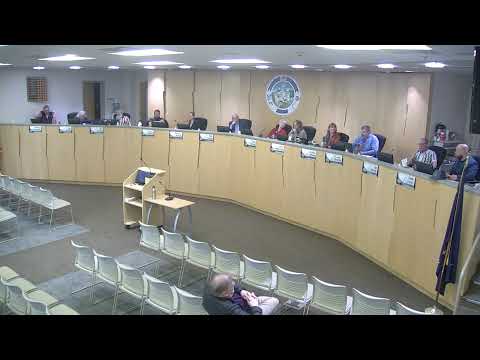
After hours of public testimony from property owners and business operators who described rapidly rising lake levels and lost shoreline, the Matanuska-Susitna Borough Assembly approved a resolution to solicit hydrologic studies of the Palmer‑area lakes tied to nearby gravel‑pit activity.
The Matanuska‑Susitna Borough Assembly voted May 5 to fund an initial hydrologic study into rapidly rising lake levels affecting Canoe, Kepler/Bradley and Irene lakes, responding to dozens of residents who said gravel‑pit excavation has punctured aquifers and drivenshoreline loss.
Residents provided detailed accounts of property loss and business impacts. “Since 2004, the surface of Canoe Lake has risen about 10 feet,” said Dennis Weatherall, who described setbacks shrinking from 156 feet to about 70 feet and estimated parcel losses. Crystal Butcher, owner of Kepler Park, said, “Kepler Park will not be opening this summer” after lakes flooded campsites and swept shorefront amenities under water. John Butcher urged the assembly to “fund this study and get to the bottom of what’s happening out there.”
Planning Director Alex Drawn told the assembly the work would build on decades of piecemeal studies and employ a toolbox of approaches, including historical imagery review, well and lake‑level data, targeted water‑tracing (dye) tests and groundwater monitoring. “There’s a long, complicated history with the gravel pits south of Palmer,” Drawn said, adding that prior reports and periodic water‑quality samples exist and could be synthesized by a consultant.
Assembly members debated whether the borough should fund an independent study, ask the state (Department of Natural Resources or Office of Dam Safety) to take the lead, or pursue a hybrid approach. Some members urged quick local action so residents could get answers “now, not five years from now.” Others noted the state has hydrologists on staff and could provide greater resources if the borough issued a formal request for assistance.
After discussion over scope and budget, the assembly approved the motion to solicit proposals for qualified hydrologists, authorizing the manager to issue a request for proposals for an initial study and to ask state agencies to participate if appropriate. The resolution was adopted with two members recorded in opposition.
What’s next: The manager will issue the request for proposals and report back with scope and cost estimates; the assembly signaled it would revisit funding if the initial effort shows the need for a broader, more expensive study.