Get Full Government Meeting Transcripts, Videos, & Alerts Forever!
Get email alerts on the Licensing Enforcement topic
No spam. Unsubscribe anytime.
Commission reviews spike in CAM complaints, clarifies settlement and hearing process
Summary
At a regularly scheduled meeting the commission reviewed a complaint-status report from the Consumer Protection Department, discussed a rise in complaints related to community association managers (CAMs), confirmed high-value settlements in several cases, and heard from legal about voluntary surrenders and hearing procedures.
Members of the commission reviewed a complaint-status report from the Consumer Protection Department and spent the bulk of the meeting discussing enforcement pathways for complaints, particularly those involving community association managers (CAMs).
The meeting opened with the approval of minutes and a brief introduction of the department’s complaint-status attachment. Commissioners asked why the department is seeing a surge in CAM-related complaints; Jill, who responded to members’ questions, said many of the complaints stem from lack of registration or missing documentation that unit owners request and noted recent changes requiring individual CAM registration and continuing-education requirements have increased reporting and enforcement activity.
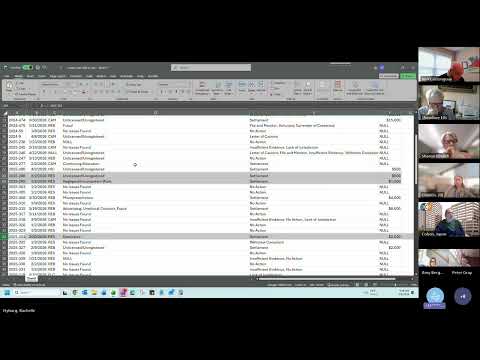
A point of confusion among commissioners involved whether certain high-dollar entries were fines or settlements. A staff speaker clarified that settlements are negotiated agreements between parties and are not constrained by statutory fine limits; the record reviewed at the meeting included a $15,000 settlement in one matter and smaller settlement amounts in others. Commissioners asked why many entries read as “no issues found” or “null”; Jill explained that anyone may file a complaint and that many complaints are dismissed after review when no statutory violation is identified. The meeting record includes multiple examples of dismissed complaints and of cases that led to settlements instead of formal sanctions.
Anna, from the department’s legal team, described the decision path for escalated cases: some matters are resolved at an informal compliance meeting, some are handled through settlements, and others are referred to a hearing officer or presented to the commission. She said the agency has accepted voluntary surrenders of licenses in certain cases (for example when a respondent was incarcerated), which permitted license removal without a full public hearing. “We have taken the license,” Anna said, and added that in the past year continuing-education disputes were typically handled by hearing officers and that unfair-trade-practices claims must go to a hearing officer rather than to the commission.
Department staff described a dual emphasis on restitution and education: when appropriate the department attempts to redirect settlement funds to make complainants whole and runs outreach and training for brokers to reduce repeat violations. Staff noted recent outreach to the Community Association Institute of Connecticut and plans for a quarterly meeting aimed at broker education.
Commissioners pressed whether cases involving alleged fraud lead to removal from practice. One commissioner cited a broker who had a $6,000 settlement for alleged fraud and asked whether that broker remained in practice; staff and legal representatives said removal from the industry requires a factual and legal process and would involve legal action rather than automatic removal based on a settlement alone.
The commission did not take additional formal enforcement actions at this meeting beyond approving the minutes. Members requested ongoing reports and suggested continued coordination with legal to clarify which matters should be brought to the commission versus handled administratively. The department said it would continue outreach and consider additional broker-focused training.
The commission adjourned with a plan to revisit complaint trends and enforcement procedures at a future meeting.