Get Full Government Meeting Transcripts, Videos, & Alerts Forever!
Get email alerts on the Land Use topic
No spam. Unsubscribe anytime.
Council approves rewritten sign code after industry objections and on-floor changes
Summary
After months of drafting and industry input, the Hot Springs Board adopted a rewritten sign code on May 5, 2026 with several amendments that restored larger freestanding pole sign allowances for commercial properties and set a January 1, 2027 effective date.
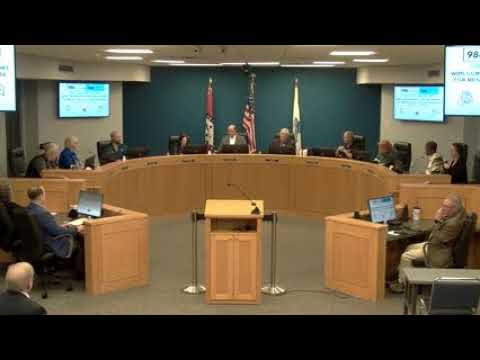
The City of Hot Springs adopted a comprehensive rewrite of its sign code (Ordinance O-26-17) on May 5, after an extended hearing that included sign-industry testimony and multiple on-floor amendments.
Background and dispute: Planning staff and the Planning Commission presented a sign-code rewrite ("Sign Code 2.0") following 11 work sessions and outreach to local sign professionals. The draft sought to modernize content-neutral regulations and initially proposed lower maximums for freestanding pole signs (for example, proposed 25 ft height and a 100-square-foot cap in some districts) and tighter definitions for monument versus pole signs to improve visual character. Sign-industry representatives, led by David Hamilton of Size Sign Company, argued the proposed caps would immediately render many existing commercial signs nonconforming and could impose substantial replacement costs for shopping centers and dealerships. Hamilton presented photo evidence and a list of examples he said would be affected.
Council response and amendments: Members debated aesthetics, visibility for drivers and tourism considerations versus commercial needs. On the floor the board removed a restriction on using pole banners as off-premise signs, restored freestanding pole sign allowances in commercial/industrial/special-purpose districts (returning to a higher height and larger display area for those districts), and created narrower limits in walkable commercial/residential transition (CTR) areas so small-block businesses are not unfairly constrained. Planning Director Kathy Salman said the code includes a non-conforming use structure so pre-existing signs may remain but structural replacements or new installations must meet the new limits unless a variance is granted.
Outcome: The board adopted the ordinance as amended and set the effective date to January 1, 2027 to allow businesses and staff time to transition and for the city to finalize administrative rules. The Planning Commission had already removed a proposed blanket ban on video screens from the draft; the council's final version includes the Planning Commission's edits and the board's newly adopted amendments.
Why it matters: The rewrite replaces an older code shaped by a 2016 U.S. Supreme Court decision about content-based restrictions (Reed v. Town of Gilbert) and attempts to balance free expression and business identification with Hot Springs's scenic and historic character. Sign industry and development stakeholders sought more flexibility to maintain visibility and commercial viability on arterial corridors; the council's amendments reflect an attempt to tailor rules by district and keep large commercial identifiers available where appropriate.
Next steps: The city will publish the new sign code text and an implementation guide for permit applicants. Businesses with existing signs should consult the planning department about whether their signs are conforming or nonconforming under the new rules and how maintenance, rebranding, or replacement will be handled.
Attribution: Testimony by David Hamilton (Size Sign Company) and staff presentations by Planning Director Kathy Salman formed the bulk of the technical record. "The new code would immediately reclassify a large number of signs as nonconforming," Hamilton told the board; planning staff argued the draft sought to reduce visual clutter and protect views while allowing variances for exceptional situations.