Get Full Government Meeting Transcripts, Videos, & Alerts Forever!
Get email alerts on the Solid Waste Funding topic
No spam. Unsubscribe anytime.
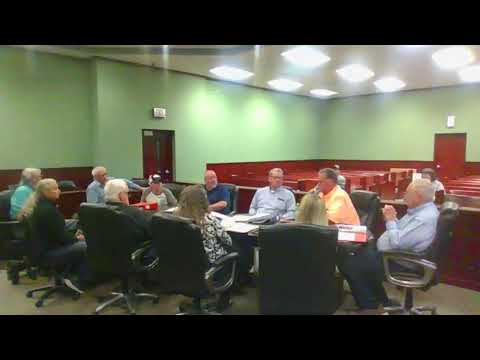
Houston County committee discusses landfill and convenience‑center funding options as tonnage rises
Summary
Committee members discussed growing disposal volumes at the county convenience center and landfill, considered options including vehicle/tag fees or a property‑tax penny (wheel‑tax concept) that members estimated could generate hundreds of thousands of dollars, and recommended forming a waste‑funding committee to study collection mechanisms and legal constraints.
Houston County budget committee members spent an extended portion of the meeting on convenience‑center and landfill funding as tonnage and disposal costs increase.
Members noted that the county has been absorbing significant disposal costs and debated whether to pursue a user fee (tag or vehicle‑based charge), a wheel/tag fee, or to add a small amount to property taxes to subsidize landfill operations. During discussion committee members offered revenue scenarios — one estimate mentioned a penny or small wheel‑tax generating roughly $300,000 to $370,000 in revenue — but participants also cautioned that collection costs and logistics (scales, staffing) can consume a large share of such revenue.
The committee agreed the matter would require a targeted working group to study options, legal constraints and the administrative cost of collection before any change could be proposed in next year’s budget. No formal motion was made at the meeting to adopt fees; commissioners said they expect this to be a topic for future discussion as the county prepares the next budget.
What’s next: committee members suggested convening a waste‑funding working group and requested staff to provide cost estimates and legal analysis that would identify whether vehicle‑tag, per‑trip, or property‑tax approaches are feasible and how much net revenue each method would produce after collection costs.
(Reporting note: several revenue examples were discussed on the record; where a dollar figure was raised in discussion but no single speaker was clearly the originator, the article attributes the amount to committee discussion rather than a single person.)