Get Full Government Meeting Transcripts, Videos, & Alerts Forever!
Get email alerts on the Student Tracker Program topic
No spam. Unsubscribe anytime.
Aurora East USD 131 staff recommend folding grant-funded student tracker work into school social workers; students and families urge board to keep positions
Summary
Superintendent ally argued the district can absorb the Student Tracker program into school social workers and a referral platform as federal grants sunset and the district faces funding changes. Several students, parents and current trackers told the board May 4 the specialized, trust-based services should be preserved.
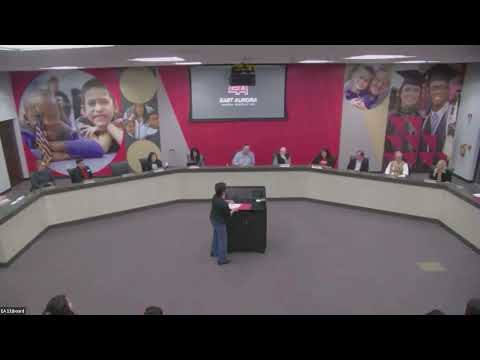
Dr. Halverson told the Aurora East USD 131 board on May 4 that the district is recommending a transition of the grant-funded Student Tracker program (formerly CVAC) into existing school social worker responsibilities and a new, grant-funded referral platform.
"The student tracker program formerly known as CVAC was originally established through grant funding," Dr. Halverson said, and the program "included seven student trackers and one manager, Martha Infante, and provided support to approximately 300 students across the district." He said the district now employs 38 social workers and has expanded partnerships that allow many families to access services directly.
The recommendation would not immediately eliminate supports, Dr. Halverson said; instead, the plan would have school social workers, with the continued support of manager Martha Infante, assume coordination of services while the district implements a referral platform (Referral GPS) intended to help families find community resources.
The proposal prompted sustained public comment from current trackers, parents and students. Norma Ortiz, who identified herself as a District 131 student tracker, told the board she and colleagues were "told Thursday that our services are being eliminated." Ortiz said trackers have historically helped hundreds of students and families, conduct weekly meetings and home visits, sit in on IEPs and provide consistent, trust-based support that is not easily replicated.
"What makes this program unique is the professional relationship that is established in order to foster trust and connection," Ortiz said, adding that trackers often carry caseloads of 40 to 50 students and that "these conversations give students a voice sometimes for the first time."
Other speakers described personal impacts they attributed to the program. A substitute teacher and parent, Norma Lopez, said her daughter’s mental health improved and that she will graduate this year after receiving services. Simmons Middle School student Sophia Infante said a tracker "made me feel seen and cared about." Several speakers urged the board to preserve the positions or keep tracker services in the district’s collective bargaining agreement.
Board members did not take a final vote on the student tracker recommendation during the May 4 meeting. Dr. Halverson said the district will implement a transition plan to connect current tracker families with school-based social workers and the Referral GPS tool. Members signaled the recommendation will be discussed further as the district addresses larger fiscal pressures in coming months.
Next steps: The district plans to phase in the referral platform and assign school social workers to take on coordination responsibilities; no formal action to eliminate tracker positions was recorded at the meeting, and community members asked the board to reconsider or preserve tracker roles as budget deliberations continue.