Get Full Government Meeting Transcripts, Videos, & Alerts Forever!
Get email alerts on the Iran Attacks Uae Security Council topic
No spam. Unsubscribe anytime.
UAE ambassador urges Security Council to act after May 4 strikes on Emirati energy sites
Summary
Ambassador Mohamed Bushhab told the United Nations Security Council that Iran launched missiles and drones at the United Arab Emirates on May 4, striking energy infrastructure and injuring three civilians; he urged the Council to compel Iran's compliance and consider measures, including a Chapter VII draft resolution under consideration.
A representative speaking for the Kingdom of Bahrain opened a Security Council meeting called at Bahrain's request to address what it described as "heinous attacks" carried out by the Islamic Republic of Iran against the United Arab Emirates on May 4.
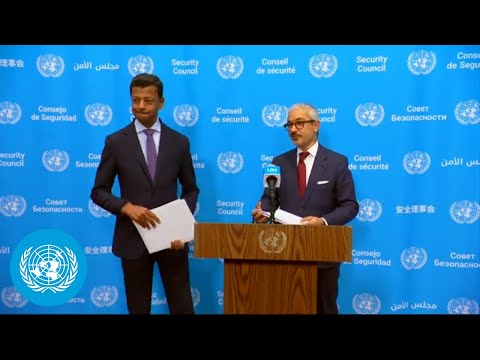
Ambassador Mohamed Bushhab, Permanent Representative of the United Arab Emirates, said Iran "launched 12 ballistic missiles, three cruise missiles and four UAVs directly at the United Arab Emirates," and that drone strikes caused a fire in the Fujairah oil industry zone. He said UAE air defenses intercepted the majority of incoming threats but that three civilians were injured.
"Targeting civilians and civilian infrastructure is not only unacceptable, it's unlawful," Ambassador Bushhab said, urging the Council to act decisively. He framed the strikes as part of an "escalating pattern" that has also included attacks on commercial vessels in the Strait of Hormuz and, he said, continued launches since Feb. 28 that the UAE has intercepted.
Bushhab cited Security Council resolution 2817 and invoked the UAE's right of self-defense under Article 51 of the UN Charter. "The Council should uphold its own decisions and compel Iran's compliance using all tools at its disposal," he said, warning that failure to act would weaken the Council's credibility and the enforceability of its resolutions.
During a brief exchange that followed, a Council member asked what consequences the UAE sought, noting the draft resolution mentions possible sanctions and other measures. A speaker responding said the draft contemplates that, in cases of non-compliance, the Council would return to consider further measures and that any measures must be appropriate and capable of compelling compliance; no vote or formal decision was recorded during the session.
The meeting did not record a Security Council vote on the draft resolution. The UAE said it would continue to work with partners for stability, security and de-escalation, and pressed the Council to hold Iran to account while emphasizing the broader economic and security risks posed by attacks on shipping and energy infrastructure.