Get Full Government Meeting Transcripts, Videos, & Alerts Forever!
Get email alerts on the Energy Development Moratorium topic
No spam. Unsubscribe anytime.
Griggs County approves six-month moratorium on data centers, solar, wind and large battery projects
Summary
The commission unanimously approved a six-month moratorium to pause new large-scale energy developments while county zoning rules are drafted. The moratorium covers data centers, solar farms, wind towers and large battery banks; the zoning official will prepare draft regulations.
Griggs County commissioners approved a six-month moratorium on new data centers, solar farms, wind towers and large battery banks to allow time to draft zoning regulations and protections for existing residents.
Jamie (zoning official) urged the moratorium, saying the county needs time to write setbacks and other rules after watching developments in Oliver County and elsewhere. "I think that the county should have a six-month moratorium on on solar development, batteries, data centers, wind farms, so we can come up with some zoning," Jamie said, adding that the moratorium would give staff time to prepare ordinances and protections for residents.
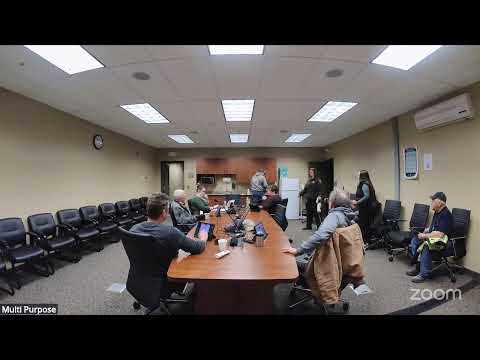
Commissioner Lauren moved for a six-month moratorium and Josh seconded. The commission asked for discussion and then adopted the motion by voice vote; the chair declared the motion carried.
Jamie acknowledged legal uncertainty about moratoriums in state law but said a temporary pause would provide time to draft enforceable zoning regulations. "There is no actual law in the state of North Dakota for moratoriums," Jamie said, but she advised the commission that courts have generally allowed local moratoria in similar contexts and offered to prepare draft language for consideration.
The moratorium explicitly covered data centers, wind towers, solar farms and large battery installations tied to electrical-grid storage; the commission did not adopt zoning language at the meeting. Commissioners directed staff and Jamie to prepare draft regulations and to bring those proposals back to the commission for review during the moratorium period.
The motion was recorded as passed by voice vote at the meeting; the transcript shows a voice vote with all members saying "I." The commission provided no written vote tally in the record and did not set a formal public-comment deadline for the drafting process at that time.
Next steps include drafting proposed ordinances, scheduling public review and returning the proposals to the commission before the moratorium expires.