Get Full Government Meeting Transcripts, Videos, & Alerts Forever!
Get email alerts on the Chesapeake Bay topic
No spam. Unsubscribe anytime.
Falls Church staff seek comp‑plan and code changes to meet Chesapeake Bay compliance deadline
Summary
City planners told council the Virginia DEQ audit found deficiencies in Falls Church’s Chesapeake Bay program and the city has an August 31, 2026 corrective‑action deadline; staff proposed initiating resolutions to amend Chapter 5 (environment) and related land‑use code sections and recommended a tight June–July review and adoption schedule.
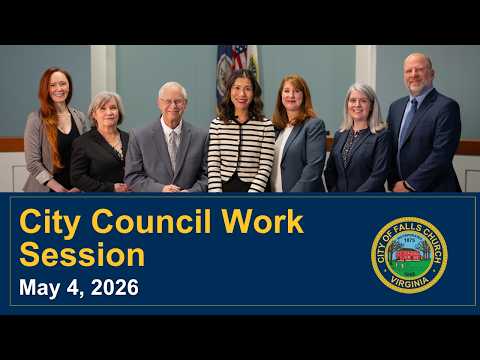
Falls Church City staff asked the City Council on May 4 to initiate amendments to the comprehensive plan and city ordinances to correct deficiencies identified in a Virginia Department of Environmental Quality (DEQ) compliance review of the city’s Chesapeake Bay Preservation Act program. Planner Emily Bazemore said the city and DEQ have executed a corrective action agreement that sets an August 31, 2026 deadline for corrective steps to restore compliance.
Bazemore told council the comp‑plan changes would be limited and integrated into existing Chapter 5 (Environment) rather than create new chapters. Required additions include a Chesapeake Bay Preservation Act map showing resource protection areas (RPAs) and resource management areas (RMAs) inside city limits; narratives and maps identifying development constraints such as steep slopes, erodible soils and flood‑prone areas; maps and narratives for known stream‑bank erosion; and a map/narrative of existing and potential pollution sources. Staff said the draft amendment will be shared with DEQ for its review before referral to the Planning Commission.
Public Works staff member Bahalu Kelay told council parallel updates to the city’s land‑use code (Chapters 35, 38 and 48) are also required to address audit findings, including: showing RPA/RMA boundaries on plats and site plans, clarifying notations to retain vegetated buffers, and limiting development within RPAs to water‑dependent uses. Both Bazemore and Bahalu recommended council adopt initiating resolutions (staff referenced TR2613, TR2614 and TR2615) for action at the May 11 council meeting to keep the city on schedule.
Councilmembers pressed staff about whether the initiating resolution could include clerical updates (for example, updating plan adoption dates and references to newer plans such as a more recent bike plan). Bazemore said that clerical corrections could be included if council chooses to broaden the initiation language, but a comprehensive chapter overhaul would be a separate planning process and could expand the scope and schedule beyond the CAA deadline. Staff also said the bulk of required maps would be included in Appendix B (the natural resource base) and that the city will create a project web page and use the city newsletter The Focus for outreach.
Bazemore repeatedly emphasized the August 31, 2026 CAA completion date; council directed staff to return with draft language in June for review and to proceed with formal adoption steps in July. No formal council vote was taken at the May 4 work session; the matter was presented for initiating the amendment and scheduling next steps.