Get Full Government Meeting Transcripts, Videos, & Alerts Forever!
Get email alerts on the Budget topic
No spam. Unsubscribe anytime.
Lemoore Council reviews FY 2026–27 draft budget and signals support for adding a fourth police beat
Summary
Finance Director Jocelyn Valdez presented a draft FY 2026–27 budget showing balanced general‑fund projections under two options; council members gave consensus direction to include Option A — adding a fourth police beat — for further refinement before adoption.
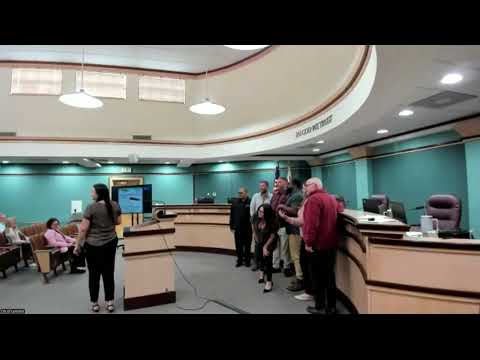
Lemoore City Finance Director Jocelyn Valdez presented the draft fiscal year 2026–27 budget at a May 5 study session, saying the city’s combined funds show proposed revenues of about $61 million and expenditures near $85 million and that the general fund proposal can be balanced under two staff options.
Valdez said the city’s total beginning balances (un-audited) and proposed general-fund figures include: a beginning general‑fund balance cited in the presentation at $17.6 million; Option A (staff recommendation) shows proposed revenues of $23.7 million and expenditures of $23.6 million, producing an ending balance of roughly $17.7 million. Option B removes the proposed fourth police beat and would raise the ending balance to about $18.3 million.
Why it matters: council members pressed staff on trade-offs between adding four police positions (the “fourth beat”), overtime savings and reserve policy. “If we add another beat, the likelihood of decreasing overtime would be significant,” one council member said, and the police chief agreed that an additional beat would improve minimum staffing and response coverage.
Valdez presented planned staffing changes for FY 2026–27, noting an increase from 122 adopted positions to 157.5 proposed positions driven in part by reclassifying contract work as part‑time staff; proposed additions include four groundskeepers, four police officers (to establish a fourth beat), one dispatcher and a community development director role.
Valdez also warned that a pending cost‑allocation study could absorb a modest projected surplus in the general fund and that enterprise funds will be evaluated separately through upcoming rate studies for wastewater and water. On enterprise funds she noted capital projects (including AMI water meters) that will draw down fund balances and said legal restrictions generally prohibit one enterprise fund from paying another without a loan agreement.
Public input and council direction: members of the public asked clarifying questions about whether the dispatcher position was full time (staff said it was) and whether the small surplus would be available for additional reserve positions (staff said it may be absorbed by cost allocation adjustments). Several council members expressed support for Option A and requested more detail on reserve accounting and implementation timing ahead of formal budget adoption.
Next steps: staff will return with a refined budget for adoption with clearer reserve accounting, the results of the cost‑allocation study, and the wastewater and water rate‑study timelines. The council’s consensus at the study session was to include the fourth‑beat option for further consideration when the budget returns for adoption.