Get Full Government Meeting Transcripts, Videos, & Alerts Forever!
Get email alerts on the Sunshine Act topic
No spam. Unsubscribe anytime.
Committee debates agenda-addition rules, "open" v. "public" wording and remote attendance
Summary
The committee discussed legal and procedural points including a judge—interpretation that treats majority-vote additions to agendas as a separate exception, whether notices should say "open" or "open to the public," and new language to allow emergency remote meetings while preserving public-comment requirements.
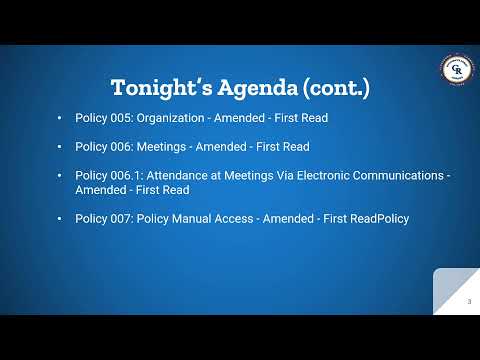
Committee members spent a large portion of the May 4 meeting on procedural rules about agendas, public notice and remote participation.
Mr. Spring reviewed the four reasons under current case law that can justify adding an item to a board agenda within 24 hours: an emergency that endangers life, a de minimis item that arises within 24 hours, business raised by a taxpayer during the meeting, and a separate "majority-vote" exception as interpreted by a judge. He told the committee that legislators are considering clarifying language to make the majority vote exception contingent on one of the other three reasons.
Board members voiced concern about public clarity and how the district advertises meetings. "All schoolboard meetings are both open and public; the ones that aren't are executive session," one member said, and several urged wording such as "open to the public" on materials where the community will see meeting notices. The committee agreed to seek solicitor input and to consider adding clearer public-facing notice language.
On remote attendance, the draft would allow board members to participate electronically when necessary, with the board president empowered to determine if a remote participant cannot be adequately heard. The revisions also add a provision allowing the board to shift to remote participation during declared emergencies while preserving sunshine-law requirements for public access and comment. Members emphasized the administration must still provide for public participation and that remote pivots should not deny the public notice or the ability to comment.
The committee flagged the agenda-addition and open/public-wording items for solicitor review and scheduled follow-up work before second readings.