Get Full Government Meeting Transcripts, Videos, & Alerts Forever!
Get email alerts on the Tidewater Phase 1b Development topic
No spam. Unsubscribe anytime.
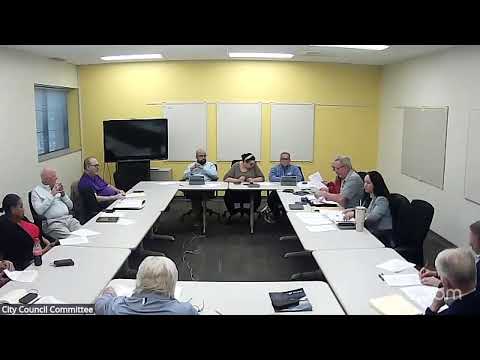
Pawtucket committees advance memorandum of agreement for Tidewater Phase 1B development
Summary
Joint finance and property committees on April 30 recommended a memorandum of agreement with Fortuitous Tidewater Oz LLC to advance Phase 1B (about 350 units) and related public infrastructure; committees voted unanimously to forward resolutions to the full council.
Pawtucket — On April 30, the city’s joint finance and city property committees voted to read, order and file a memorandum of agreement (MOA) between Fortuitous Tidewater Oz LLC and the city to advance Phase 1B of the Tidewater development, a package that the committee presentation described as a roughly 350‑unit residential mixed‑use project with associated public improvements.
The MOA, as presented to the committees, folds together multiple documents that define how the parties will move the residential and mixed‑use portions forward and how public infrastructure will be delivered. Key public improvements described in committee discussion include a riverwalk, a stormwater park and a pedestrian bridge; the MOA would convey the public improvement parcel for the stormwater park to the city and adjust development fees to reflect that change in responsibilities.
The document also establishes limited purchase options on two private parcels to give the developer a simple title path required by a financing partner identified in the presentation as Wood Partners; those purchase options would be exercisable only when the relevant portion of the project is ready to proceed and has demonstrated financing readiness. Committee members asked whether the option prices would remain fixed; the presenter said the prices would be locked, though the transcript records the figures only as “135 and 95” without specifying units or currency.
Committee members also secured clarifications on operational details. The city will reduce an administrative charge tied to police/fire detail by 50% (staff emphasized the change affects an administrative fee rather than direct policing costs). The development agreement includes maintenance obligations for private parties to keep certain public improvements (for example, trash removal and grass cutting), with a tax adjustment mechanism that offsets developer maintenance costs against payments under the tax stabilization schedule. Snow and ice removal were described as excluded from the developer maintenance obligations.
Staff told the committee that drainage and off‑site stormwater work remain under review with the Coastal Resources Management body (CRMC) and that the permitting review is expected in June, with financing pieces to coalesce later in the summer or early fall. The MOA requires regular oversight reporting: quarterly written updates from the developer to the council and an annual progress report due Dec. 31.
On procedural votes, the joint committees approved motions to read, order and file the MOA and to recommend a resolution authorizing the mayor to enter into the MOA; committee roll calls recorded unanimous support among the members present, and the measures were forwarded to the full council for final action.
The committees also considered related amendments to the master development agreement and to a ground lease for properties on Division and Taft streets and voted to recommend those changes to the full council. The city signaled that staff will present more details at the public hearing scheduled for May 6, when the council will take up the MOA and the package of related resolutions.