Get Full Government Meeting Transcripts, Videos, & Alerts Forever!
Get email alerts on the Budget Adoption topic
No spam. Unsubscribe anytime.
Cherry Hill board adopts 2026–27 budget after presentation that closes a $29 million gap with savings, staffing shifts and a tax levy increase
Summary
The Cherry Hill Board of Education voted to adopt a $307 million 2026–27 budget after district leaders outlined a $29 million structural gap, $8 million in operational savings, planned staffing reductions through attrition and a proposed local tax levy increase that raises the average homeowner's fiscal-year cost by about $420.
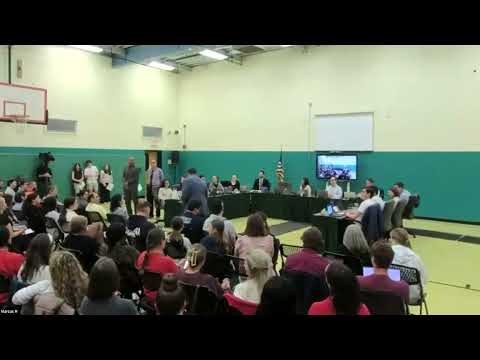
The Cherry Hill Board of Education voted to adopt the district's 2026–27 budget following a presentation from superintendent Dr. Morton and business staff that described a $29 million structural gap driven by rising noncontrollable costs and changes in state aid. Board President Ms. Winters moved the recommendation and Mr. Greenbaum seconded; the motion carried on a roll‑call vote.
District leaders told the board the gap grew out of years of state underfunding and the exhaustion of one‑time surpluses. Superintendent Dr. Morton said the district implemented a zero‑based review of every expenditure and identified about $8 million in recurring operational savings, "savings that will be sustainable as we move forward," while also noting the need for additional staffing reductions estimated at roughly $6.5 million.
The finance presentation by Mr. Schiff laid out the revenue and expenditure picture and the tools the district proposes to use to balance the year. Mr. Schiff said the total of the district's three major funds is just over $307 million, that prior-year unassigned fund balance has been used to cover shortfalls in recent years, and that the general‑fund portion of the tax levy proposal would increase local property taxes. He estimated the impact on the average assessed home (about $227,000) at roughly $420 for fiscal 2026–27 and explained the district planned to use banked cap and a health‑benefits waiver as part of the levy strategy.
Administrators emphasized protections they said remain in the recommendation: a full‑day preschool program for nearly 900 students, full‑day kindergarten at current class caps, interventionists at every elementary, elementary encore offerings including music, art, Spanish and computer science, an extensive course catalog at the high schools and maintenance of services for students with IEPs. Dr. Morton told the board the district intends to preserve core instructional programs while restructuring operationally and said many position reductions would be handled through attrition, not involuntary layoffs.
Public reaction at the meeting was intense and sustained. Students, teachers, interventionists and parents urged the board to preserve early‑literacy positions and elementary computer science, warned that raising class caps and cutting reading supports would harm vulnerable learners, and asked the board and community to continue pressing Trenton for fairer state aid. First‑grade reading support teacher Sandra Wilcox described her Kilmer model and said it serviced "approximately 150 instructional slots" and trained staff across classrooms; parents and educators said losing that kind of capacity would quickly show in student outcomes.
Board members framed the decision as difficult but constrained by state timelines and the district's fiscal condition. Several trustees called the state funding formula broken and urged community advocacy at the legislative level; a board member also noted that a failure to pass the budget could have led the state to impose a budget.
The board followed the superintendent's recommendation and adopted the 2026–27 budget by roll call. The administration said it will continue to monitor class sections and staffing allocations over the summer and that some details (section assignments and exact program delivery models) will be finalized before the school year begins.
The district posted a detailed Budget Book and Budget Clarity Hub for community review, which administrators recommended for residents seeking a deeper breakdown of assumptions and line items.