Get Full Government Meeting Transcripts, Videos, & Alerts Forever!
Get email alerts on the Pensions And Benefits topic
No spam. Unsubscribe anytime.
Consultant previews Section 115 trust to prefund district OPEB liability
Summary
PARS briefed the Snowline board on using a Section 115 trust to prefund retiree health liabilities valued at about $10.6 million, laying out investment choices, expected fees (~0.32%) and steps to establish the trust if the district chooses to move forward.
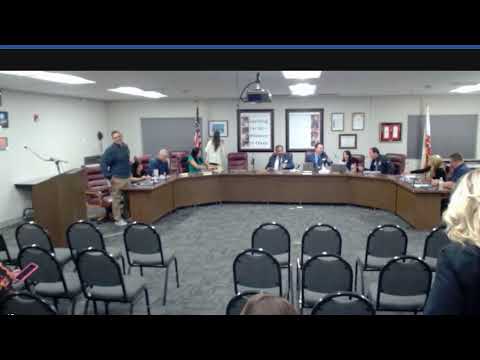
Trustees heard an informational presentation from Dennis U, executive vice president of PARS, on a Section 115 trust as a tool to address the district's retiree healthcare obligations (OPEB).
Dennis U said the district's most recent actuarial valuation placed the OPEB liability at approximately $10.6 million. "Currently the district does not have funds set aside into an irrevocable trust to offset this liability," he told the board, and described how a Section 115 trust could allow the district to invest assets tax-exempt under PARS's IRS private letter ruling and potentially earn higher long‑term returns by including equity exposure in diversified portfolios.
PARS summarized options ranging from a fixed‑income strategy (no equities) to a growth portfolio (around 75% equities). The presenter said PFM Asset Management would manage investments and U.S. Bank would serve as trustee; combined program fees were described as roughly 0.32 percent of assets, with no PARS setup fee.
Dennis U said potential benefits include: (1) offsetting the OPEB liability on government financial statements with trust assets, (2) using a higher discount rate tied to trust returns which can lower reported liabilities, and (3) improving credit profile by demonstrating proactive funding of long‑term liabilities. He also described the usual next steps: a future board resolution to participate, appointment of a plan administrator and selection of an investment strategy if the board opts to proceed.
The item was informational; no board action was taken at the meeting.
"If the trust has any interest earnings, dividends or capital gains, there would not be any tax consequences to the district," Dennis U said, noting PARS's private letter ruling coverage.