Get Full Government Meeting Transcripts, Videos, & Alerts Forever!
Get email alerts on the Neighborhoods topic
No spam. Unsubscribe anytime.
Charter review panel weighs putting Office of Neighborhoods into Everett charter
Summary
City staff and neighborhood representatives told the Charter Review Committee that Everett’s Office of Neighborhoods—established in 1990 and now an engagement team reporting to the mayor—remains valued but lacks stable funding; the committee agreed to record the discussion in its final report as context rather than a formal charter recommendation.
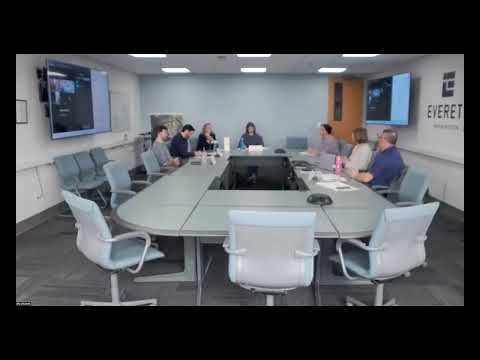
Everett — City staff and neighborhood representatives told the Charter Review Committee on April 23 that the city’s Office of Neighborhoods remains an important local connector but that codifying it in the charter raises questions about funding and scope.
City staff member Jennifer summarized the request from residents and outside commenters — including Holly James, Andrew Tucker and Julie Martinson — that the committee consider putting the Office of Neighborhoods into the city charter. She described the current structure as “an engagement team of three” that reports to the director of strategic initiatives and the mayor and staffs the Council of Neighborhoods, noting the office’s work has broadened since it was created in 1990.
Supporters, including representatives from the Delta and other neighborhood organizations, urged a stronger, funded and permanent role for neighborhood organizations. One neighborhood representative said the Office previously provided more consistent staffing and a regular police precinct presence that helped with public-safety conversation and continuity.
Other committee members cautioned that the charter may not be the right place to lock in funding and suggested the council could provide budget support instead. Several members also flagged volunteer capacity and demographic differences across neighborhoods as reasons to preserve neighborhood-level organizations alongside newer district town halls.
Jennifer told the committee that the city currently provides two forms of neighborhood funding: mini-grants of about $1,000 for basic meeting needs and a council-set allocation that amounts to roughly $5,278 per neighborhood from one-time council funding. Staff said departments still use neighborhood organizations for outreach and that district town halls are intended as a complementary, not replacement, model.
After extended discussion, the committee decided to include the neighborhood conversations and trade-offs in its final report as contextual material rather than advancing a formal motion to enshrine the Office in the charter. Staff was asked to document community input, funding options and the practical trade-offs discussed by the committee for inclusion in the committee’s final report.